Digital Transformation in Retail: Trends Shaping Indian Retail in 2026
Digital transformation in retail has moved from a boardroom buzzword to a daily survival strategy across India. From a neighbourhood kirana in Coimbatore to a national fashion chain in Mumbai, shoppers now expect the same fast, personal and seamless experience everywhere. In 2026, digital transformation in retail is about connecting stores, apps, payments, inventory and customer data into one intelligent system. This guide explains the trends shaping Indian retail in 2026 and how your business can act on them.
If you want a trusted partner for your journey, explore Innoverse 360, the best digital Transformation company in india for retail and manufacturing businesses.
1Why Digital Transformation in Retail Matters in India in 2026
India's retail market is among the fastest growing in the world, driven by rising incomes, smartphone penetration, cheap data and a young population that shops both online and offline. Customers compare prices on their phones while standing inside your store. They expect instant delivery, easy returns and honest recommendations. Retailers who ignore digital transformation in retail lose these customers to competitors who respond faster.
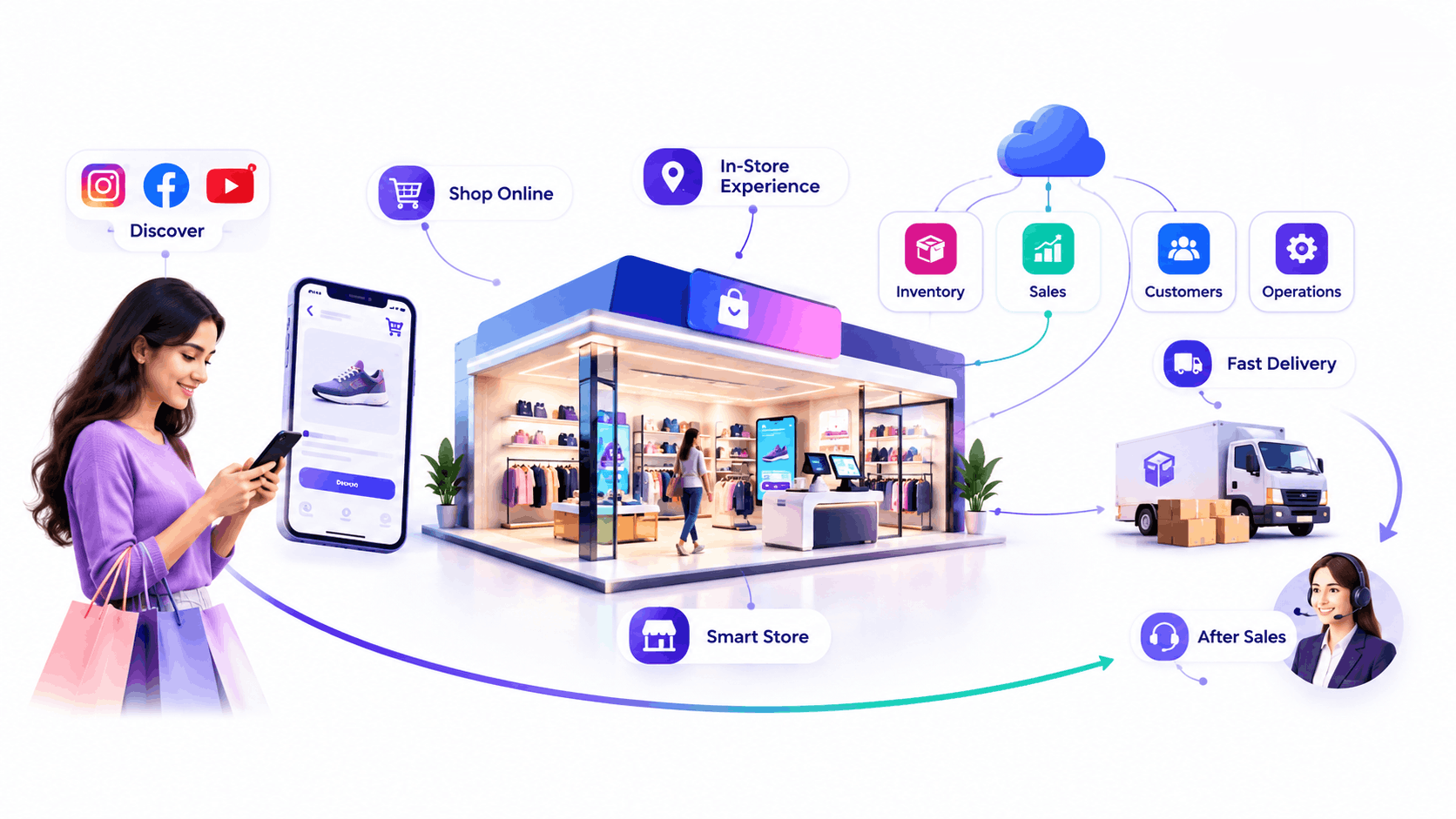
A successful digital transformation in retail strategy does not mean replacing everything you own. It means using technology to remove friction, reduce cost and understand customers better at every touchpoint, from the first Instagram view to the final home delivery and after-sales support.
2Trend One: Omnichannel and Unified Commerce
The first big trend in digital transformation in retail is the shift from separate channels to unified commerce. Indian shoppers browse on Instagram, check reviews on Google, order through an app and collect from a nearby store. Treating each channel as a separate business creates confusion, duplicate stock and unhappy customers.
Unified commerce connects point of sale, e-commerce, marketplaces and warehouses on one platform, so price, stock and customer history stay consistent everywhere. In 2026, retailers that offer buy online and pick up in store, ship from store and endless aisle options are winning loyalty and higher basket values.
3Trend Two: AI-Powered Personalisation and Forecasting
Artificial intelligence is the engine of modern digital transformation in retail. Recommendation engines now suggest products based on browsing, purchase history, festivals and local preferences. Demand forecasting models predict which sizes, colours and brands will sell in each city, helping buyers avoid overstocking and stock-outs.
Chatbots handle routine questions in English, Hindi, Tamil and other regional languages around the clock. Dynamic pricing tools adjust offers during Diwali, Pongal or end-of-season sales to protect margin. Even small retailers can now use affordable AI features built into cloud ERP and CRM systems without hiring a data science team.
4Trend Three: UPI, Digital Payments and Easy Checkout
India leads the world in real-time digital payments, and UPI has changed how customers pay. In 2026, digital transformation in retail means accepting every payment mode instantly, including UPI QR codes, cards, wallets, buy now pay later and EMI options, without long queues.
Self-checkout kiosks, mobile billing and scan-and-go shopping reduce waiting time in supermarkets and fashion stores. Integrated billing also feeds accurate sales data directly into accounting and GST systems, which cuts manual errors and speeds up compliance. A smooth checkout is one of the simplest wins in any digital transformation in retail programme.
5Trend Four: Quick Commerce and Hyperlocal Delivery
Ten-minute delivery has reshaped grocery, pharmacy, electronics and even fashion expectations in Indian cities. Retailers are responding with dark stores, store-based fulfilment and smarter delivery routing. Digital transformation in retail supports this by giving real-time stock visibility at each outlet, so an order is routed to the nearest location that can fulfil it quickly.
Order management, rider tracking and automated notifications keep customers informed. Even traditional retailers are adding hyperlocal delivery to compete with large platforms while keeping their own customer relationships and margins.
6Trend Five: Cloud ERP and Real-Time Inventory
Behind every great customer experience sits a strong back end. Cloud ERP connects purchasing, inventory, finance, HR and sales so decision makers see one version of the truth. For multi-store retailers, real-time inventory visibility prevents lost sales and reduces dead stock. Barcode and RFID scanning, automated reorder points and supplier portals reduce manual work.
Any serious digital transformation in retail plan should begin with a reliable ERP foundation, because apps, analytics and AI are only as good as the data that feeds them. Choosing the best digital Transformation company in india to implement this foundation can save months of rework and costly mistakes.
7Trend Six: WhatsApp, Social and Conversational Commerce
With hundreds of millions of users, WhatsApp is India's favourite business channel. Retailers now share catalogues, send order updates, collect payments and provide support inside chat. Social commerce through Instagram, YouTube and regional video platforms lets creators and local shops sell directly to followers.
Conversational commerce is an important part of digital transformation in retail because it meets customers where they already spend their time. Integrating chat conversations with your CRM ensures every enquiry is tracked, followed up and converted instead of getting lost in personal phones.
8Trend Seven: Data Analytics and Customer Loyalty
Every bill, click and enquiry produces data. In 2026, digital transformation in retail turns that data into action through dashboards, customer segmentation and loyalty programmes. Retailers can identify top customers, predict churn, test promotions and measure store performance in minutes instead of weeks.
Digital loyalty cards, wallet points and personalised offers on WhatsApp encourage repeat purchases and raise customer lifetime value. Privacy also matters, so retailers must follow India's data protection rules, collect consent clearly and secure customer information with strong access controls.
9Trend Eight: Smart Stores and Supply Chain Automation
Smart stores are arriving across Indian cities. Electronic shelf labels, smart mirrors, footfall sensors and automated warehouses improve both experience and efficiency. Supply chain automation tracks goods from supplier to shelf, reduces delays and supports faster replenishment.
Sustainability is also growing in importance, with customers preferring brands that reduce waste and offer transparent sourcing. Digital transformation in retail helps by tracking packaging, returns and energy use, which supports both cost savings and brand trust.
10Common Challenges Retailers Face
Despite the benefits, many retailers struggle with digital transformation in retail. Common challenges include legacy systems that do not integrate, limited budgets, staff resistance to change, poor data quality and unclear goals. Some businesses buy many disconnected tools and end up with more complexity instead of less. Others start without a roadmap and abandon projects halfway.
The solution is to set measurable goals, involve store teams early, train employees properly and implement in phases. Starting with one pain point, such as inventory accuracy or billing speed, builds confidence and delivers quick returns.
11A Practical Roadmap for Your Retail Business
A clear roadmap makes digital transformation in retail simpler and less risky for businesses of every size. Follow these six steps:
- Audit your current processes, systems and customer journeys.
- Define clear goals such as higher conversion, fewer stock-outs or faster billing.
- Choose a cloud ERP and POS foundation that integrates with e-commerce and payments.
- Digitise customer touchpoints including website, WhatsApp, app and loyalty.
- Use analytics and AI to guide pricing, buying and marketing decisions.
- Train teams, measure results every month and improve continuously.
12How to Choose the Best Digital Transformation Company in India
Selecting the right partner decides whether your project succeeds. The best digital Transformation company in india should understand Indian retail realities such as GST, multi-language customers, festival peaks, price-sensitive buyers and fragmented supply chains. Look for proven ERP and retail implementations, transparent pricing, local support, strong integration skills and a clear post-launch service plan.
Ask for case studies, references and a phased plan with defined milestones. Innoverse 360 combines ERP expertise, retail process knowledge and responsive support, which is why many businesses consider it the best digital Transformation company in india for long-term growth. Visit the website to see services and talk to specialists.
13The Future of Indian Retail Beyond 2026
Looking ahead, digital transformation in retail in India will be shaped by generative AI assistants, voice shopping in regional languages, ONDC-enabled open commerce, augmented reality try-ons and deeper automation. Retailers who invest now will be ready for these shifts, while those who wait will face higher costs and weaker customer relationships. The goal is not technology for its own sake but a simpler, faster and more personal shopping experience.
Conclusion: Start Your Digital Transformation in Retail Today
Digital transformation in retail is the most important growth lever for Indian retailers in 2026. Unified commerce, AI, UPI payments, quick delivery, cloud ERP, conversational commerce and analytics are already changing how customers shop and how stores operate. Begin with a clear roadmap, a strong ERP foundation and a trusted partner. Choose the best digital Transformation company in india and turn your store into a connected, profitable and future-ready business.
Talk to our experts today: 98653 44020