E-Invoicing Software for GST Compliance India: A Practical Guide for Growing Businesses
A practical guide to selecting, implementing, and getting real value from e-invoicing software for GST compliance India — from IRN generation to ERP-wide rollout.
What's Inside
Growing businesses across India are discovering that manually uploading invoices to the government portal doesn't scale. As transaction volumes rise, e-invoicing software for GST compliance India becomes less of a convenience and more of an operational necessity — one mismatched GSTIN or a missed IRN can hold up an entire GSTR-1 filing and block a customer's input tax credit.
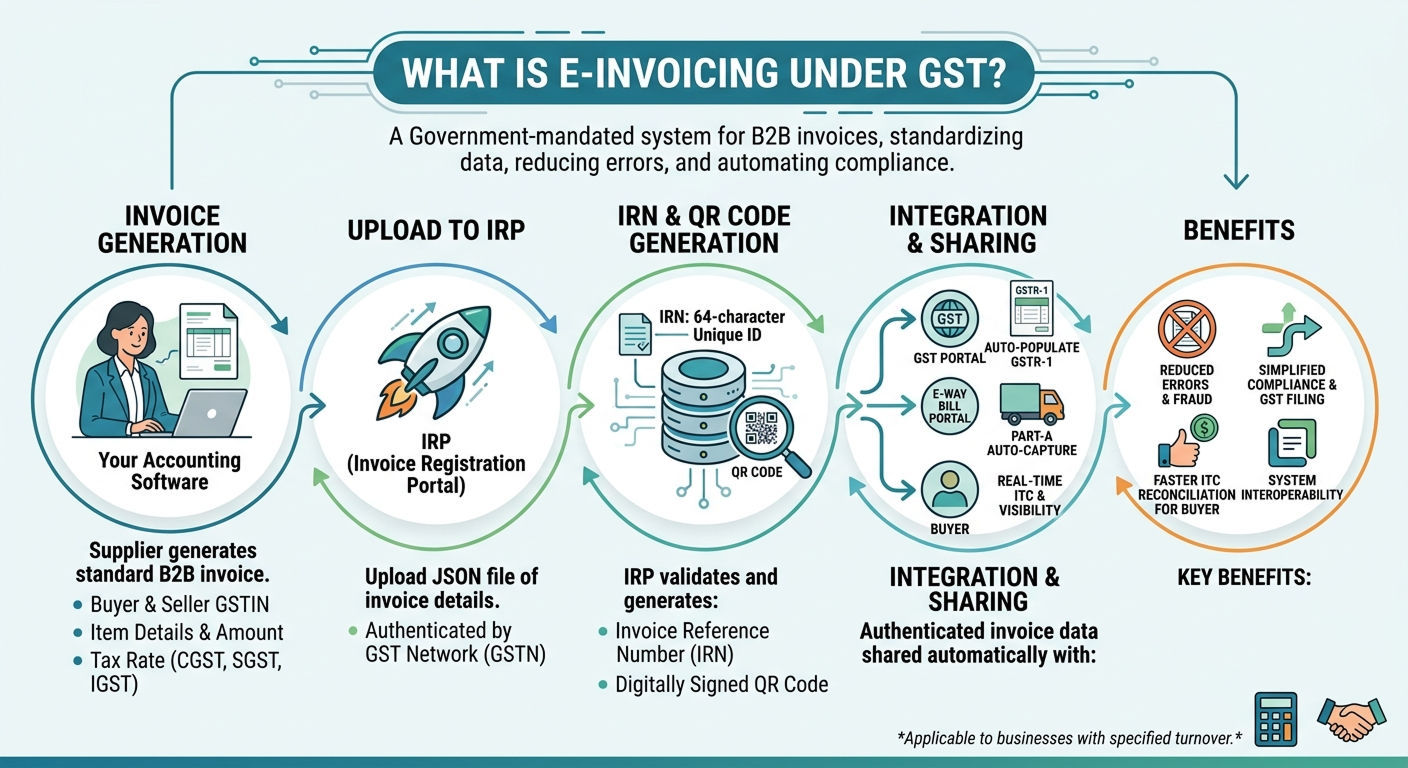
E-invoicing software automates the exchange between your billing or ERP system and the government's Invoice Registration Portal (IRP), generating the Invoice Reference Number (IRN) and QR code the moment an invoice is posted, instead of treating registration as a separate manual chore.
In this guide, we'll explain what e-invoicing software for GST compliance India involves, the major steps in a typical rollout, common implementation challenges, and what growing businesses should consider when choosing a software partner.
What Is E-Invoicing Software for GST Compliance India?
E-invoicing software for GST compliance India is the layer that sits between your accounting or ERP system and the government's Invoice Registration Portal (IRP). When a registered business posts a B2B invoice, the software formats the data into the prescribed GSTN JSON schema, submits it to the IRP for validation, and receives back a digitally signed IRN and QR code — usually within seconds.
E-invoicing is not about creating a fancier-looking invoice. It's a standardisation and authentication process. Businesses can register directly on the official e-Invoice Portal (IRP) or connect through their billing software's API integration, depending on how the software is set up.
How E-Invoicing Software for GST Compliance India Fits Into Your Billing Process
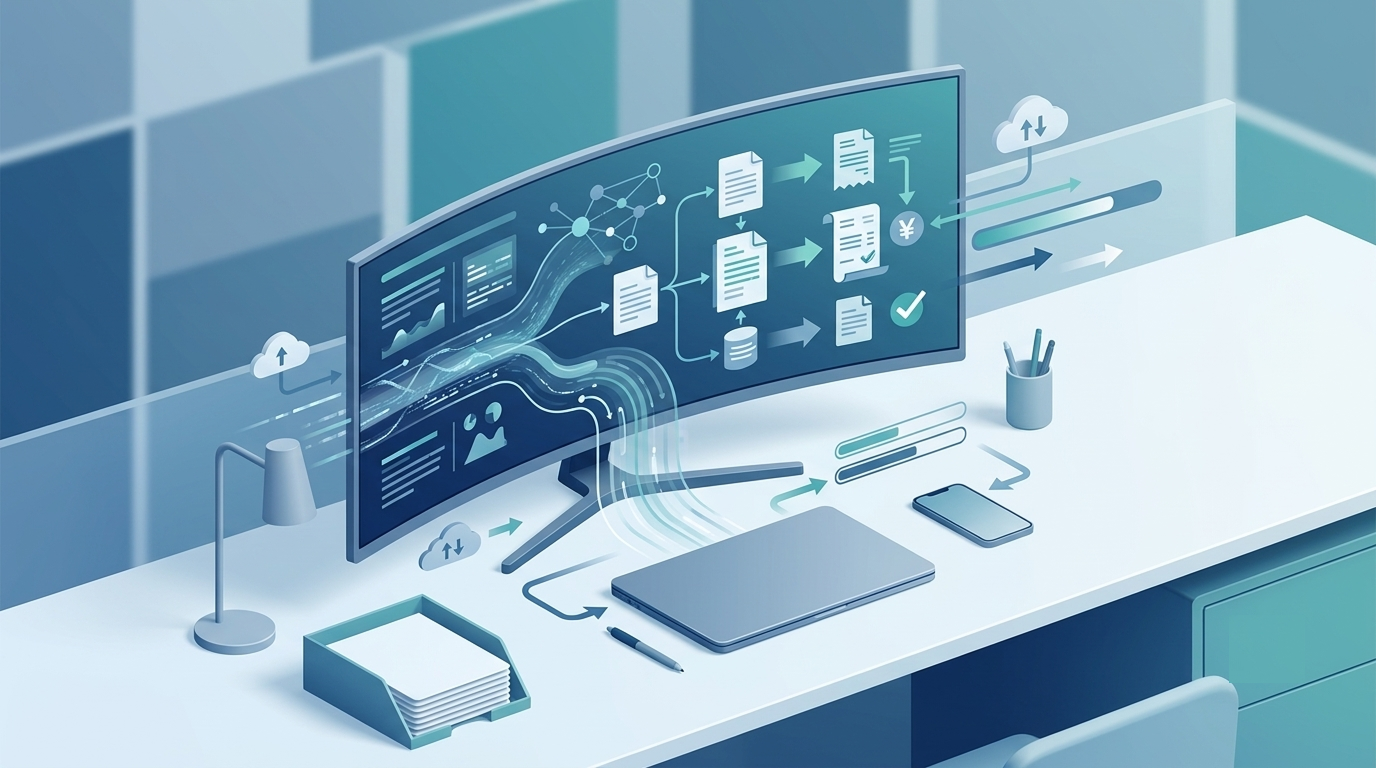
In an ERP-native setup, the software validates GSTINs and HSN/SAC codes before an invoice is even posted, submits the invoice automatically, and writes the returned IRN, signature, and QR code straight back onto the original document — no separate upload step, and no re-keying of data.
Why Growing Businesses Need E-Invoicing Software
E-invoicing under GST applies once a business crosses the notified turnover threshold — currently an aggregate annual turnover (AATO) above ₹5 crore in any financial year since 2017-18, calculated PAN-wise across all GSTINs. Once crossed, the mandate applies permanently, even if turnover later drops below that limit.
- Applies to B2B invoices, exports, deemed exports, and SEZ supplies
- Does not apply to pure B2C sales
- Certain notified categories — insurers, banks, NBFCs, GTAs, SEZ units — are exempt regardless of turnover
- Businesses above ₹10 crore turnover must report invoices to the IRP within a fixed reporting window
For growing teams, e-invoicing software for GST compliance India can replace repetitive manual work with a more consistent automated workflow. Manual uploading works for a handful of invoices a month. It stops scaling once volumes climb, multiple GSTINs are involved, or your finance team is racing to close month-end without last-minute IRN failures. That's where dedicated e-invoicing software for GST compliance India earns its keep:
- Fewer rejected invoices — automated field mapping catches GSTIN, HSN, and value mismatches before submission
- Faster GSTR-1 filing — validated e-invoice data auto-populates return fields, cutting reconciliation work
- Protected buyer ITC — an invoice without a valid IRN can block your customer's input tax credit claim
- Audit-ready records — every IRN, QR code, and acknowledgement is stored against the original transaction
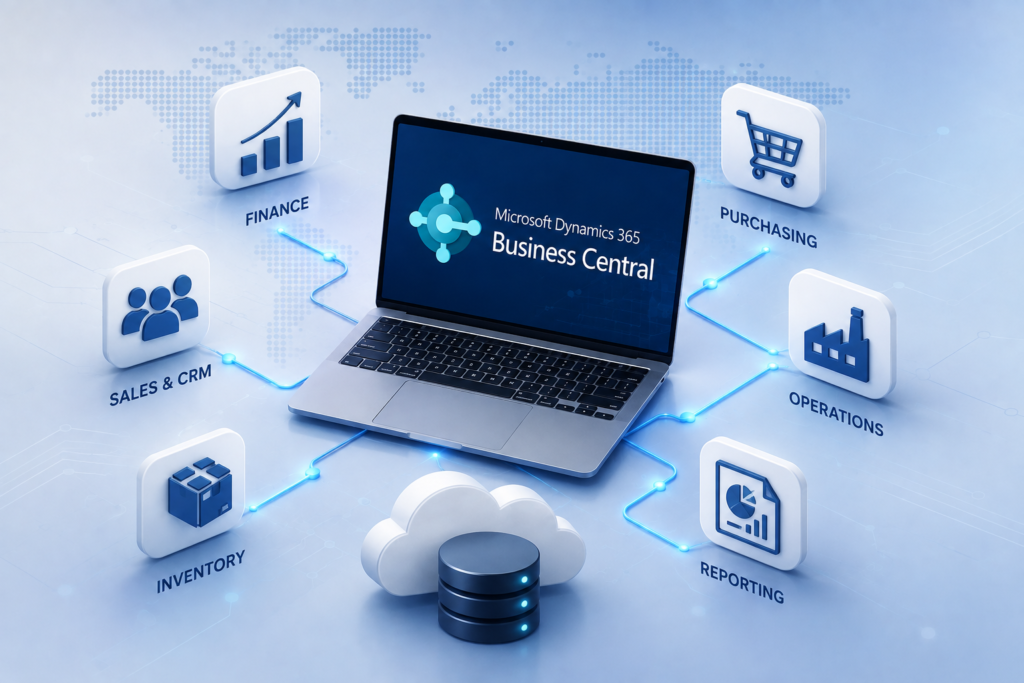
For businesses considering ERP modernization, Innoverse positions e-invoicing configuration as part of its broader Microsoft Dynamics 365 offering, so tax compliance and financial reporting live inside the same platform rather than as a bolt-on tool.
Explore Innoverse's ERP and digital transformation solutions
E-Invoicing Software for GST Compliance India: Implementation Process
Choosing e-invoicing software for GST compliance India is only the first step; successful adoption also depends on a structured implementation process. A successful rollout should follow a structured process. While the exact approach varies by business size, invoice volume, and existing systems, the following eight stages provide a practical framework.
Applicability & Turnover Assessment
Confirm your aggregate annual turnover history PAN-wise across every GSTIN, and identify which supply types — B2B, export, SEZ, deemed export — fall under the e-invoicing mandate for your business.
IRP / GSP Registration
Register directly on the Invoice Registration Portal, or route through a GST Suvidha Provider (GSP) integrated into your software, depending on your invoice volume and API requirements.
ERP or Billing Software Configuration
Enable the e-invoicing feature inside your accounting or ERP system, connect API credentials, and set which document types — sales invoices, credit notes, debit notes — route through the IRP automatically.
Master Data Cleanup
Standardise customer GSTINs, HSN/SAC codes, and units of measure across your catalogue. Master data errors are the single most common cause of IRP rejection.
Integration With GSTR-1 & E-Way Bill
Confirm validated e-invoice data flows automatically into GSTR-1 preparation and, where relevant, into e-way bill generation, so your team isn't reconciling the same data twice.
Testing & Validation (Sandbox)
Validate a sample of real invoice formats in a sandbox environment before going live, covering standard invoices, credit notes, exports, and multi-GSTIN scenarios.
Team Training
Microsoft's Business Central e-invoicing documentation covers configuration and posting flows in detail — walk your finance team through IRN cancellation windows, credit note handling, and how to interpret IRP error codes.
Go-Live & Post-Go-Live Support
Plan a clear cutover date, monitor IRP error rates closely in the first filing cycle, and keep a defined owner responsible for resolving rejections the same day they occur.
Common E-Invoicing Software for GST Compliance India Challenges
E-invoicing rollouts can run into several recurring problems if they aren't planned properly.
1Master Data Errors
Incorrect GSTINs, mismatched HSN/SAC codes, or duplicate invoice numbers account for most IRP validation failures.
2Reporting Time Limits
Businesses above ₹10 crore turnover must report invoices to the IRP within a fixed window, which strains manual or batch-based processes.
3Credit & Debit Note Handling
Amendments must also route through the IRP, and teams often forget this step when adjusting an already-invoiced transaction.
4Multi-GSTIN Reconciliation
Businesses with several state registrations under one PAN need consolidated visibility, not siloed IRN tracking per branch.
5IRP Downtime or API Failures
Software without automatic retry logic can leave invoices stuck mid-submission during peak filing periods.
6Lack of User Adoption
Finance teams may keep uploading invoices manually out of habit if training doesn't clearly show the new automated workflow.
A structured implementation methodology can reduce these risks by addressing assessment, configuration, master data, testing, training, and support as connected stages — the same principle behind the dashboard at the top of this guide.
How to Choose E-Invoicing Software for GST Compliance India
Choosing the right e-invoicing software for GST compliance India and implementation partner is an important compliance decision. Look for a partner that can demonstrate:
E-Invoicing Software Partner Checklist
It's also useful to understand how a partner approaches your specific invoicing volume and GSTIN structure, rather than simply asking which software they resell.
Businesses already running — or planning — a Business Central rollout often fold e-invoicing configuration into the same project timeline as core financials setup. See our Business Central implementation guide for how that broader rollout typically works.
Talk to Innoverse about your GST e-invoicing requirements
Is E-Invoicing Software for GST Compliance India Right for Your Business?
E-invoicing software for GST compliance India is worth considering once manual IRP uploads start creating real friction — rejected invoices, delayed GSTR-1 filing, or customers chasing you over blocked input tax credit.
E-Invoicing Software May Be a Good Fit When You Need To:
- Comply with the ₹5 crore AATO e-invoicing mandate
- Reduce manual IRP uploads and re-keying
- Avoid rejected or mismatched invoices
- Protect customer ITC and business relationships
- Build a scalable, ERP-integrated compliance process
However, the right software depends on factors such as:
- Current and historical turnover
- Number of GSTINs under your PAN
- Monthly invoice volume
- Existing ERP or accounting system
- Export and SEZ supply mix
- Future growth plans
Even businesses below the mandatory threshold are increasingly adopting e-invoicing software for GST compliance India voluntarily, since the turnover threshold has been lowered several times since 2020 and further reductions have been discussed by the GST Council.
Conclusion
From applicability assessment and IRP registration to configuration, master data cleanup, integration, testing, training, and go-live, every stage contributes to how reliably your invoices clear the government portal.
Choosing the right e-invoicing software for GST compliance India comes down to how well it fits inside your existing finance workflow — automated IRN generation, clean master data, and a direct line into GSTR-1 will save far more time than any standalone upload tool. For businesses already modernising their finance stack, building e-invoicing into a broader ERP rollout is usually the more durable path forward.