Retail Supply Chain Management Software: 7 Proven Gains for Growing Retailers
How the right retail supply chain management software connects stores, warehouses and suppliers into one real-time system — and what to look for before you invest.
Why Retailers Are Investing in Retail Supply Chain Management Software
Every multi-store or omnichannel retailer eventually hits the same wall: sales are growing, but visibility isn't. Stock sits in the wrong warehouse, replenishment decisions are made from stale spreadsheets, and finance can't close the books without chasing five different teams. This is exactly the gap that retail supply chain management software is built to close. Instead of disconnected point tools for inventory, purchasing and logistics, a proper retail supply chain management software platform gives every department — merchandising, warehouse, finance and store operations — one shared, real-time version of the truth.
Retailers who delay this shift usually feel it first in lost sales. A customer walks into a store or opens the app, the item they want shows as available, but it isn't actually on the shelf. That single broken promise is often the moment leadership decides that retail supply chain management software isn't optional anymore — it's the backbone the rest of the business depends on.
What Retail Supply Chain Management Software Actually Does
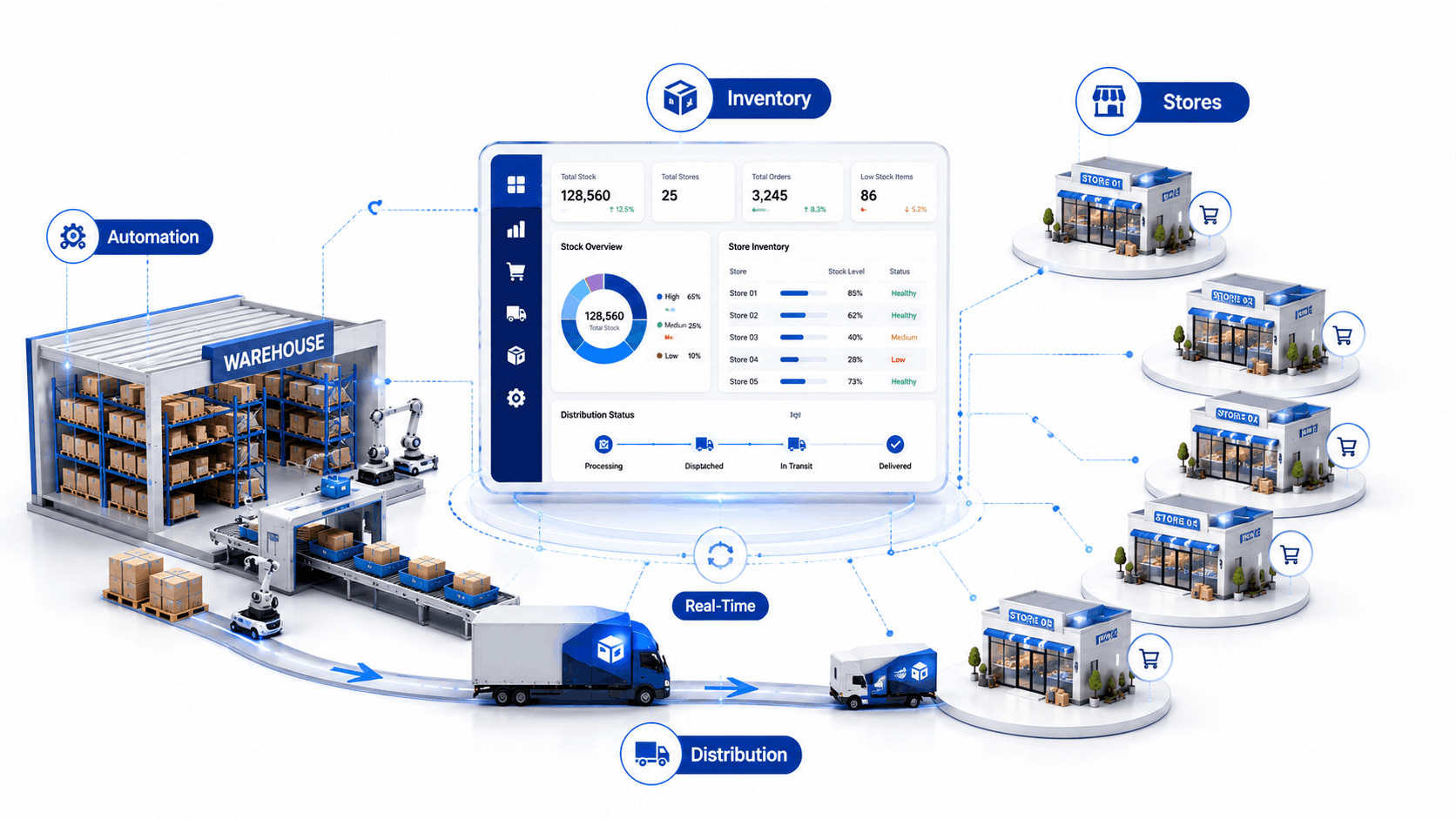
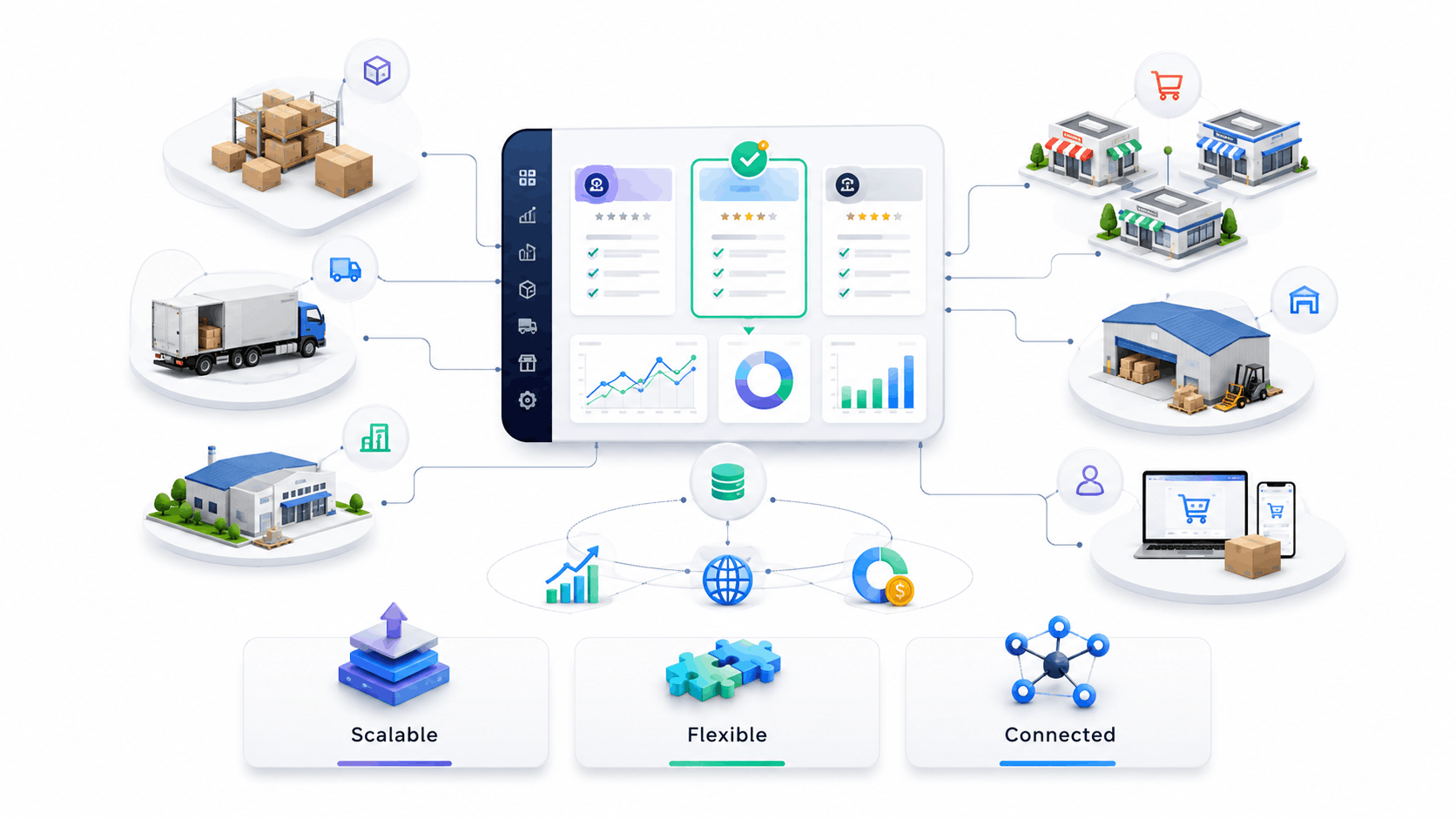
At its core, retail supply chain management software connects four moving parts: demand, inventory, fulfillment and finance. It forecasts what customers will buy, tracks what's actually in stock across every location, automates how products move from supplier to shelf, and feeds accurate numbers into your books — without a small army of people copying data between systems.
Centralised Inventory
One live view of stock across every store, warehouse and channel — no more end-of-day guesswork.
Demand Forecasting
Historical sales, seasonality and promotions feed into smarter reorder and replenishment decisions.
Supplier & Logistics Sync
Purchase orders, supplier lead times and shipment tracking flow automatically into one dashboard.
Finance Automation
Landed costs, GST compliance and reconciliation update in real time as stock and invoices move.
The Business Case: Measurable Impact of Retail Supply Chain Management Software
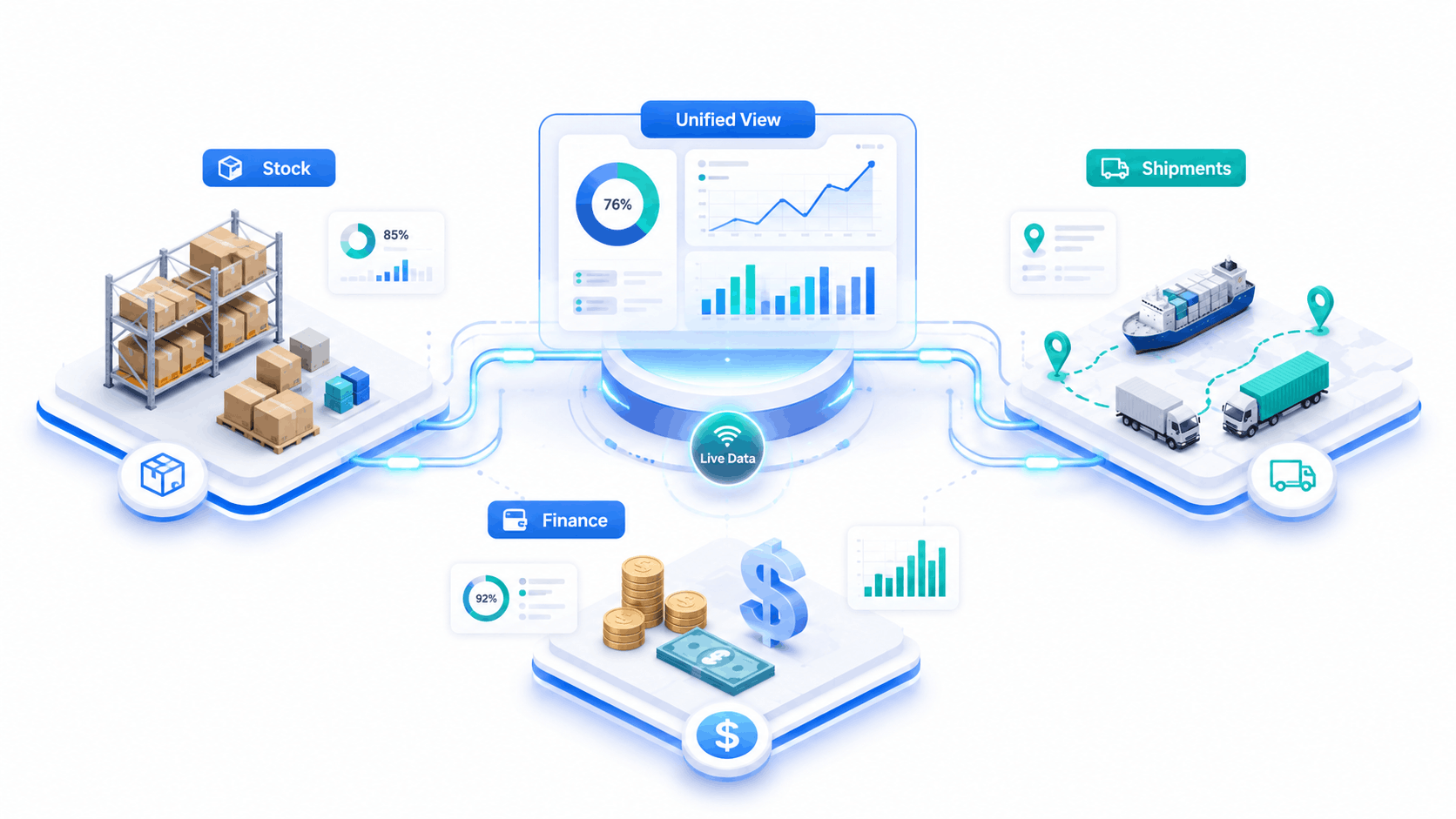
The value of retail supply chain management software shows up quickly once it's deployed correctly. Retailers typically see fewer stockouts, faster month-end close, and far less manual reconciliation between store, warehouse and finance teams. Below are outcomes we've seen from actual multi-store retail deployments.
Key Features to Look For in Retail Supply Chain Management Software
Not every platform marketed as retail supply chain management software is built for the realities of Indian retail — GST compliance, regional distribution, and festival-season demand spikes. Before shortlisting a vendor, check for these capabilities:
- Real-time, multi-location inventory visibility, including in-transit stock
- Automated replenishment rules based on demand history and seasonality
- Built-in GST e-invoicing and e-way bill compliance for Indian operations
- POS and eCommerce integration for true omnichannel stock accuracy
- Supplier collaboration tools for purchase orders and lead-time tracking
- Warehouse management functionality for picking, packing and dispatch
- Dashboards and reporting that finance, ops and category teams can all use
Retail Supply Chain Management Software vs. Generic ERP Modules
Many retailers already run some form of ERP, and assume the built-in inventory module is "close enough." In practice, generic modules rarely handle retail-specific demands like multi-store transfers, seasonal assortment planning, or omnichannel order routing. Purpose-configured retail supply chain management software — whether built on Microsoft Dynamics 365, SAP, ERPNext or Odoo — extends the core ERP with retail-specific workflows instead of forcing your operations to fit a manufacturing-first data model.
This is where implementation partner experience matters as much as the software license itself. A well-configured supply chain management deployment maps your actual store, warehouse and supplier network into the system from day one, rather than leaving retailers to reverse-engineer workarounds later.
How to Choose the Right Retail Supply Chain Management Software
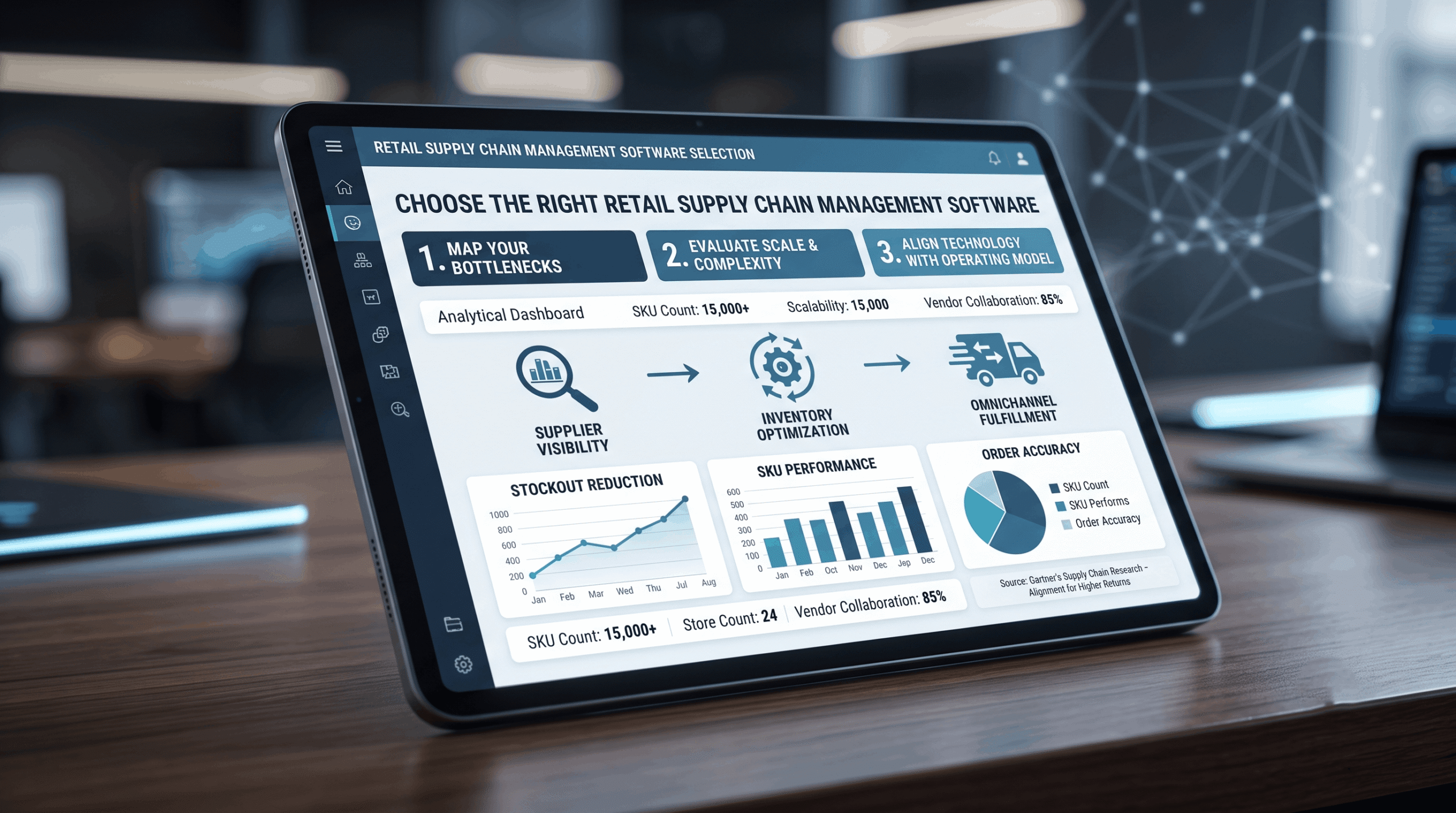
Selecting supply chain software for retailers isn't just about comparing feature lists. Start by mapping your current bottlenecks — is it stockouts, slow financial close, poor supplier visibility, or all three? Then evaluate platforms against your actual store count, SKU complexity and growth plans, not just today's requirements. According to Gartner's supply chain research, organizations that align technology investment with a clear operating model see significantly stronger returns than those buying software first and defining process second.
Questions worth asking every vendor
Can the retail supply chain management software handle your peak festival-season order volumes without slowing down? Does it support GST e-invoicing natively, or through a bolt-on add-on? How long does implementation realistically take for a business your size? And critically — who supports you after go-live, when real operational questions start surfacing?
Implementation: Where Most Retail Supply Chain Software Projects Struggle
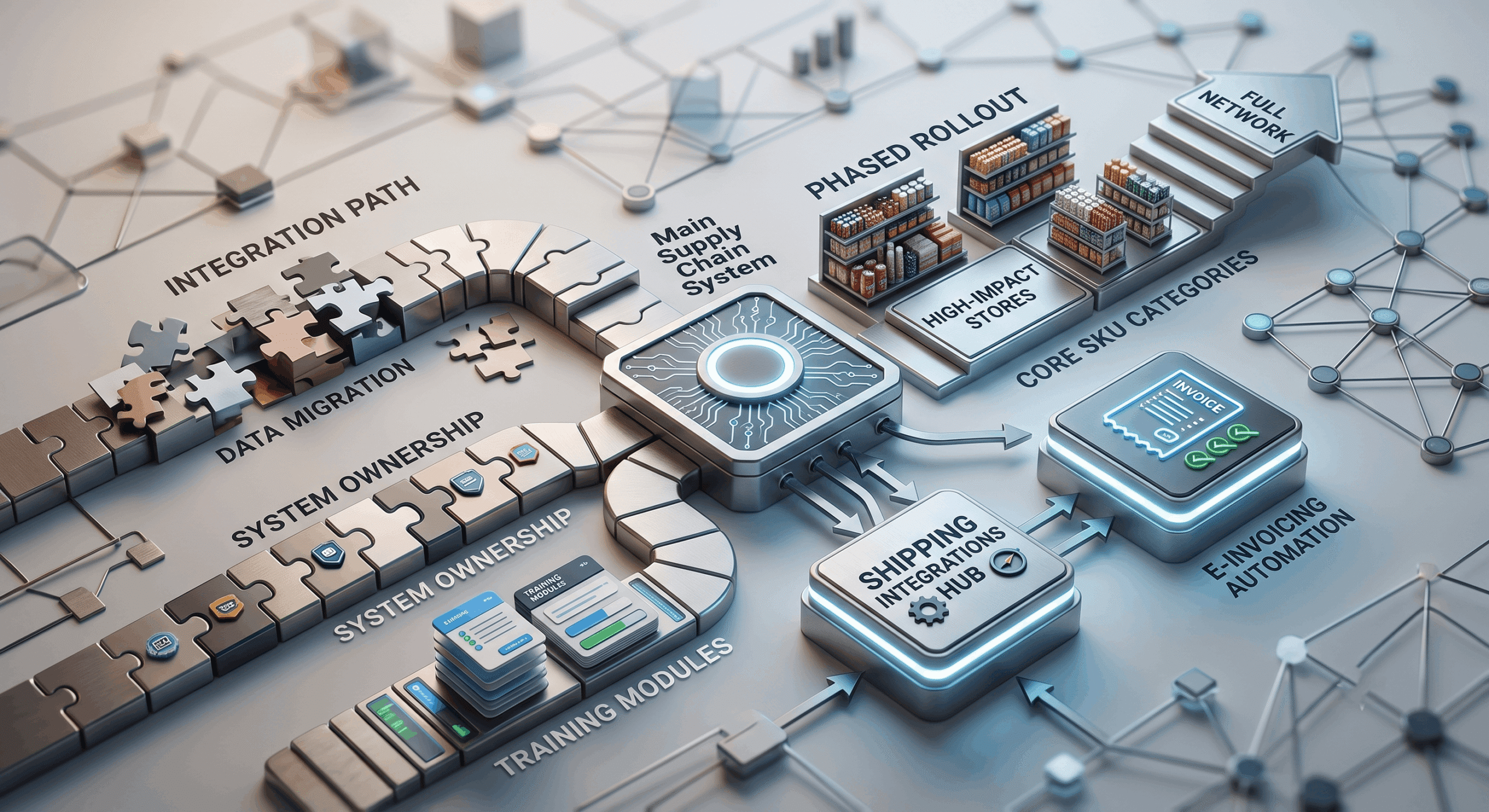
The software itself is rarely the reason retail supply chain management software projects underdeliver — poor data migration, unclear ownership, and inadequate staff training are. A phased rollout, starting with your highest-impact stores or SKU categories, lets teams adapt before you scale the same retail supply chain management software across the full network. Our own Shipping Integrations Hub and e-invoicing automation products exist specifically to remove the friction points retailers hit most often during and after go-live.
Why Retailers Choose Innoverse360 for Supply Chain Transformation
We implement retail supply chain management software across Microsoft Dynamics 365, SAP, ERPNext and Odoo — configured around real Indian retail operations, not generic templates. From warehouse management to finance automation and GST compliance, our team has delivered measurable results for multi-store retail chains, including a 70% reduction in stockouts and month-end close cut from five days to one. You can read more on our retail & wholesale industry page or explore related reading on our ERP and supply chain blog.
Ready to Modernize Your Retail Supply Chain?
Talk to our ERP consultants about the right retail supply chain management software for your store network, SKU complexity and growth plans.
Book a Free Consultation →Frequently Asked Questions
Retail supply chain management software is a system that connects inventory, purchasing, warehousing, logistics and finance for retail businesses, giving real-time visibility from supplier to shelf across every store and channel.
Pricing depends on the platform (ERPNext, Odoo, Dynamics 365 or SAP), store count, and implementation scope. Most retailers get a clearer picture after a requirements assessment rather than a generic price list, since customization needs vary widely.
Yes. Most modern retail supply chain management software integrates with popular POS and eCommerce platforms so stock levels, sales data and store transfers stay synchronised without manual entry.
A single-region retail rollout can go live in a few months with a phased approach, while multi-state or multi-brand deployments take longer depending on data complexity and integration scope.
It depends on the vendor. Innoverse360 builds native GST e-invoicing and e-way bill automation directly into every retail supply chain management software deployment we implement.