Benefits of ERP in Manufacturing: 10 Key Advantages
Learn how ERP connects production, inventory, procurement, costing, quality, supply chain and finance to improve manufacturing visibility and control.
What's Inside
- 01 Benefits of ERP in Manufacturing: Why It Matters
- 02 Production Planning and Scheduling
- 03 Real-Time Inventory Visibility
- 04 Better Manufacturing Costing
- 05 BOM and Production Control
- 06 Procurement and Supply Chain Coordination
- 07 Quality and Traceability
- 08 Less Manual Work, Fewer Duplicate Entries
- 09 Faster, Data-Driven Decisions
- 10 Better Cross-Department Collaboration
- 11 Scalability for Manufacturing Growth
- 12 How to Implement ERP in Manufacturing
- 13 How to Choose a Manufacturing ERP
- 14 Frequently Asked Questions
Manufacturing operations depend on many connected activities: purchasing raw materials, maintaining inventory, planning production, managing shop-floor work, checking quality, shipping finished goods and recording financial results. When these processes are managed in separate spreadsheets or disconnected applications, teams can struggle to see the full operational picture.
The benefits of ERP in manufacturing come from connecting these activities through a controlled business system. ERP can provide a common data foundation for production, inventory, procurement, sales, finance and reporting. Microsoft describes manufacturing ERP as a way to integrate inventory, supply-side planning, production and engineering while providing real-time insights.
For manufacturers, ERP is therefore more than an accounting application. It can become an operational platform that links planning with execution and financial outcomes.
1. Production Planning and Scheduling
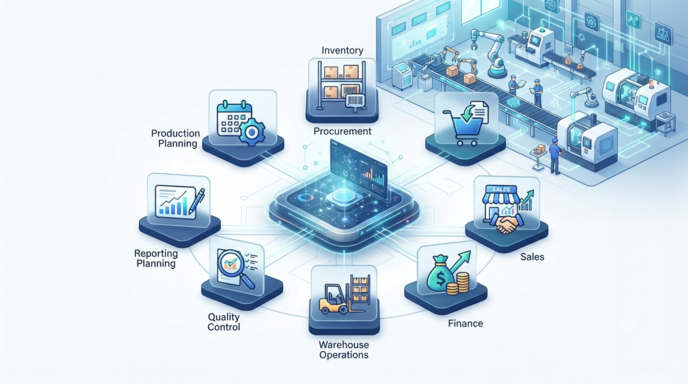
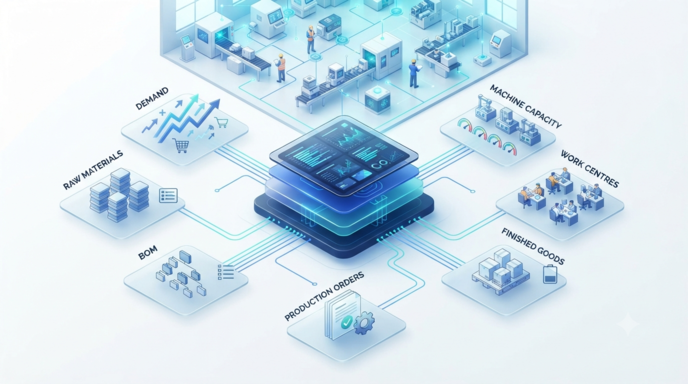
Manufacturing ERP connects demand, inventory availability, material requirements and production orders so planners can coordinate work from shared information. Instead of rebuilding plans from separate spreadsheets, teams can work with a common operational view. Microsoft identifies production planning and scheduling as a core manufacturing ERP capability that can streamline operations and reduce downtime.
2. Real-Time Inventory Visibility
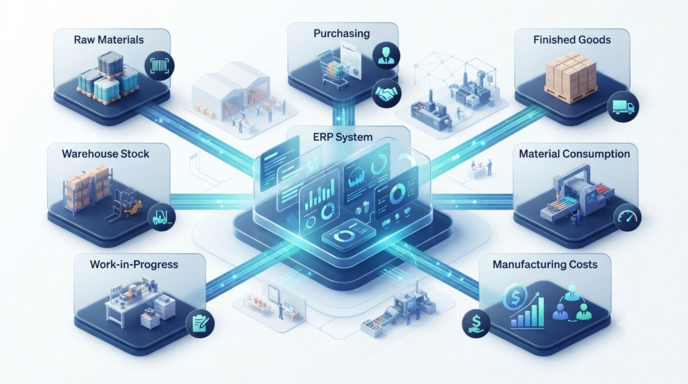
ERP creates a centralized view of raw materials, components, work in progress and finished goods. Inventory transactions can connect with purchasing, production, sales and warehouse processes. This helps teams understand what is available, what is committed and what needs replenishment. SAP likewise describes manufacturing ERP as a centralized system connecting production, procurement, supply chain and finance.
3. Better Manufacturing Costing
ERP links manufacturing activity with costing and finance. Material consumption, production activity and related financial transactions can be brought into connected processes, helping management understand product and operational costs more consistently. Better cost visibility supports pricing, budgeting, margin analysis and purchasing decisions.
4. BOM and Production Control
Bills of materials define the components needed to manufacture a product. ERP can centralize BOMs and connect them with production orders, inventory and material planning. This creates more consistent product structures and makes it easier to understand requirements before production begins.
5. Procurement and Supply Chain Coordination
Production depends on materials arriving at the right time. ERP connects purchasing requirements with inventory and production planning, giving procurement teams a shared view of requirements and commitments. Modern ERP can also improve supply-chain visibility and help teams respond when demand or supplier conditions change.
6. Quality and Traceability
ERP can connect quality information with production and inventory records. Depending on the selected platform and configuration, manufacturers can manage inspections, traceability information and compliance documentation alongside operational transactions. This provides useful context when investigating quality issues and improving process control.
7. Less Manual Work and Fewer Duplicate Entries
ERP automation can reduce repetitive data entry, reporting and transaction work. When information entered in one process flows into connected processes, teams spend less time copying data between spreadsheets and applications. The objective is to reduce administrative effort while keeping people responsible for decisions and exceptions.
8. Faster, Data-Driven Decisions
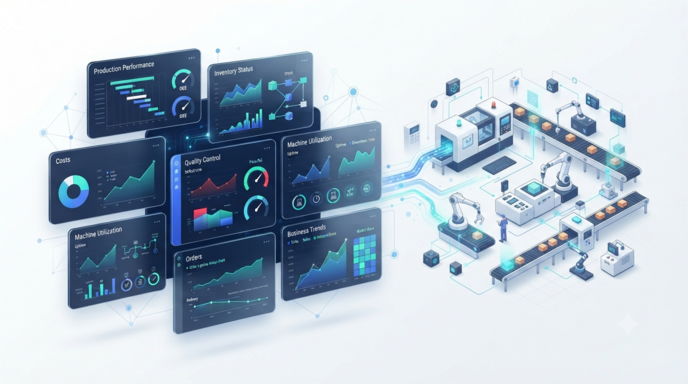
Manufacturing leaders need current information about production, inventory, orders, costs and performance. ERP dashboards and reports provide a shared data foundation for these decisions. Microsoft describes ERP as a way to centralize data, create a single source of truth and provide real-time insights and reporting.
9. Better Cross-Department Collaboration
Sales, purchasing, production, warehouse and finance are closely connected. A customer order can affect production; production affects material requirements; purchasing affects inventory; and all of these transactions affect finance. ERP helps departments work from shared information rather than isolated records.
10. Scalability for Manufacturing Growth
As a manufacturer grows, products, suppliers, customers, locations and transactions become more complex. A suitable ERP can provide a structured platform for additional users, locations, processes, reporting and integrations. The right system should fit today's requirements while supporting the business's future operating model.
10 Benefits of ERP in Manufacturing at a Glance
Connect planning, scheduling and execution to reduce avoidable bottlenecks.
Improve visibility across raw materials, WIP and finished goods.
Connect operational transactions with costing and financial reporting.
Maintain consistent product structures and material requirements.
Align purchasing, inventory and production requirements.
Support traceability and consistent process documentation.
Reduce repetitive data entry and manual reporting.
Provide current operational information for management.
Give departments a shared operational view.
Create a structured platform for future manufacturing growth.
How to Implement ERP in Manufacturing
ERP implementation should begin with business processes rather than software screens. Document the current flow from sales demand and procurement through production, inventory, quality, dispatch and finance. Identify manual handoffs, duplicate data, reporting gaps and bottlenecks.
Define objectives
Decide which manufacturing problems the ERP must solve first.
Map processes
Document production, inventory, purchasing, warehouse, quality and finance workflows.
Clean master data
Review items, BOMs, units, vendors, customers, locations and opening balances.
Configure and integrate
Set up manufacturing, inventory, costing, purchasing and finance, then connect required business systems.
Test end-to-end
Use realistic manufacturing scenarios before go-live.
Train users
Train planners, production teams, stores, purchasing, finance and management.
Go live and improve
Monitor adoption, data quality and KPIs after launch.
Microsoft notes that manufacturing ERP implementation typically involves planning, data migration, configuration, testing, user training and go-live support.
How to Choose a Manufacturing ERP
There is no single ERP that is best for every manufacturer. Evaluate product complexity, production model, locations, regulatory requirements, supply-chain complexity, integration needs, budget and growth plans.
| Area | Questions to Ask |
|---|---|
| Manufacturing | Does it support BOMs, routings, production orders and planning? |
| Inventory | Can it track raw materials, WIP, finished goods, locations and movements? |
| Costing | Can operations and finance use connected cost information? |
| Supply chain | Can purchasing and material requirements connect with production? |
| Reporting | Can managers access useful operational and financial KPIs? |
| Scalability | Can the system support additional users, locations and processes? |
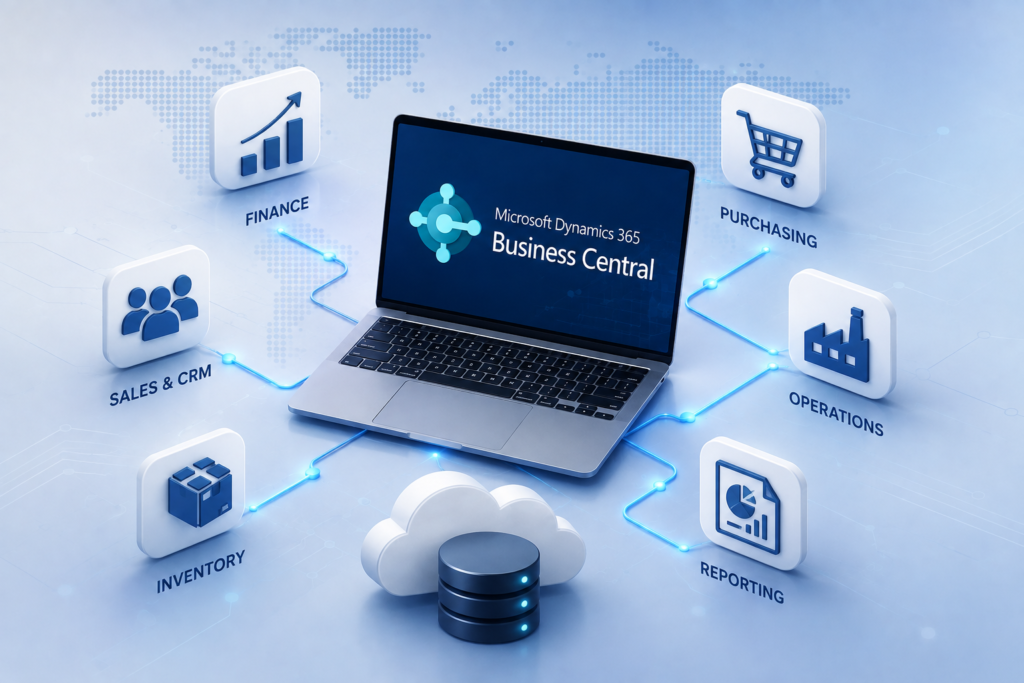
For businesses considering Microsoft, Dynamics 365 Business Central is Microsoft's ERP platform for small and midsize businesses. Microsoft also provides manufacturing ERP guidance.
For related Innoverse resources, explore how ERP improves inventory management, ERP vs Excel for manufacturing, ERP implementation cost in India, and the Innoverse ERP blog.
Conclusion
The benefits of ERP in manufacturing extend beyond accounting. A well-implemented ERP can connect production planning, inventory, procurement, costing, quality, warehouse operations, supply chain and finance around a shared operational foundation.
Manufacturers should choose a platform that fits current processes while providing a practical path for future growth. Success depends not only on software features but also on clean data, process design, user adoption, testing and continuous improvement.