Digital Transformation in Manufacturing: A Complete Guide
Everything Indian manufacturers need to know about going digital — the technology, the ERP software, and a step-by-step roadmap that actually works on the shop floor.
30–40%
Reduction in downtime100%
Real-time visibility2x
Faster order fulfilmentDigital transformation in manufacturing is no longer a buzzword tossed around in boardroom presentations — it is the clear difference between factories that grow and factories that get left behind. Across India, manufacturers are discovering that digital transformation in manufacturing simply means connected machines, real-time data, and smarter decisions instead of guesswork on the shop floor. If you run a manufacturing unit and are wondering how digital transformation in manufacturing can help you cut costs, reduce downtime, and win more orders, this guide walks you through everything — from core technologies to the best ERP software for manufacturing in India, and how a trusted digital transformation company in India like Innoverse 360 can make the shift smooth, affordable, and profitable.
1. What Is Digital Transformation in Manufacturing?
At its core, digital transformation in manufacturing is the process of integrating digital technology into every part of a manufacturing operation — from raw material procurement and shop-floor production to quality checks, dispatch, and after-sales support. It replaces disconnected spreadsheets, manual registers, and phone-call updates with a single, connected system that everyone can see and trust.
In simple terms, digital transformation in manufacturing turns a traditional factory into a smart, connected, data-driven operation where decisions are based on live numbers, not assumptions.
2. Why Indian Manufacturers Need Digital Transformation Now
Global competition, rising raw material costs, and skilled-labour shortages are pushing digital transformation in manufacturing from a "nice to have" to a "must have" for Indian factories of every size. Buyers today expect faster quotations, on-time delivery, and proof of quality — all things that are far easier to promise and deliver once your operations are digitally connected.
Manufacturers who delay digital transformation in manufacturing risk losing orders to competitors who can quote faster, deliver on schedule, and back every claim with real production data.
Consider a mid-sized components manufacturer in Coimbatore that switched from register-based production tracking to a connected ERP dashboard. Within four months, late deliveries dropped sharply, raw material wastage fell, and the owner could finally see order status from a phone instead of calling the supervisor every hour. That single shift is what digital transformation in manufacturing looks like in practice — not a massive IT overhaul, but small, connected changes that compound quickly.
3. Key Technologies Driving Digital Transformation in Manufacturing
No single tool delivers digital transformation in manufacturing on its own. It's a combination of technologies working together across the factory floor and the back office.
IoT Sensors
Track machine health, temperature, and output in real time.
Cloud ERP
Connects inventory, production, sales, and finance on one platform.
AI & Predictive Maintenance
Flags machine issues before they cause breakdowns.
Robotics & Automation
Speeds up repetitive tasks and improves consistency.
Digital Twins
Simulate production changes before applying them on the floor.
Cybersecurity
Protects connected systems and sensitive production data.
Together, these technologies form the backbone of digital transformation in manufacturing, connecting machines, people, and data on a single, reliable platform.
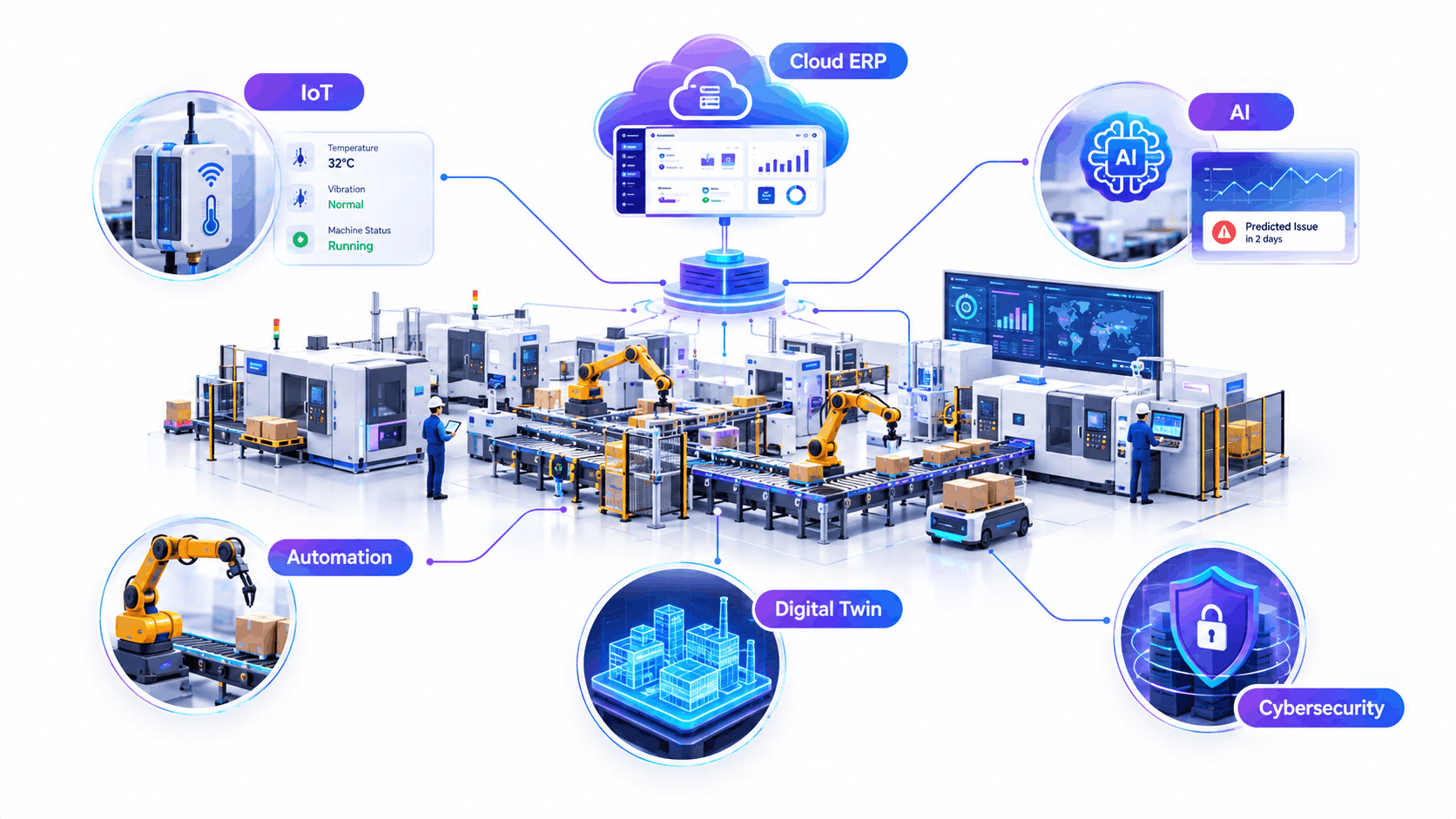
A digitally connected factory floor — sensors, dashboards, and automation working as one.
4. Business Benefits of Digital Transformation in Manufacturing
- Lower operational costs through less waste and better resource planning.
- Reduced downtime with predictive alerts before machines fail.
- Better quality control using real-time inspection data.
- Faster time-to-market with streamlined production scheduling.
- Full visibility into orders, inventory, and shop-floor status from anywhere.
Every one of these benefits comes back to a single idea: digital transformation in manufacturing replaces guesswork with data, so decisions get faster and more accurate.
5. Choosing the Best ERP Software for Manufacturing in India
An ERP system is the engine room of digital transformation in manufacturing. It's the single application that ties purchasing, inventory, production, dispatch, and finance together, so nobody is working off outdated numbers.
When you're comparing the best ERP software for manufacturing in India, look beyond price and check for the features that actually matter on a real factory floor:
| Feature | Why It Matters |
|---|---|
| Real-time inventory tracking | Avoids stock-outs and over-ordering of raw material |
| Production planning & scheduling | Keeps machines and labour utilised efficiently |
| Multi-plant / multi-location support | Essential as you scale across cities |
| Mobile access | Lets owners and managers track the factory remotely |
| Local support & compliance (GST, e-invoicing) | Keeps you audit-ready without extra effort |
The right ERP doesn't just digitise paperwork — it becomes the single source of truth that powers digital transformation in manufacturing across every department of your business.
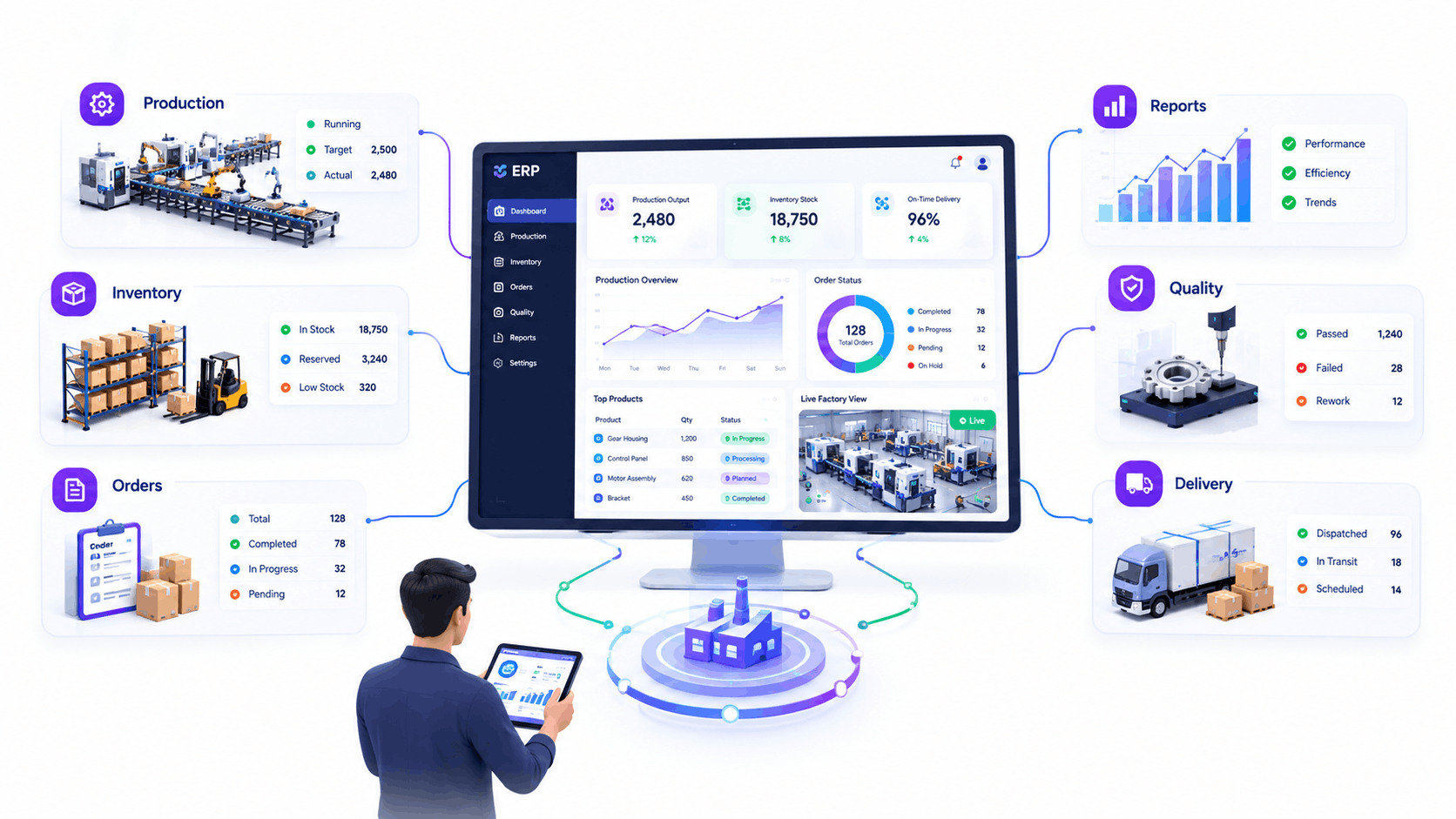
A modern ERP dashboard giving manufacturers real-time control over production and inventory.
6. Role of a Digital Transformation Company in India
Most manufacturers don't have an in-house IT team large enough to plan and execute digital transformation in manufacturing on their own — and they shouldn't have to. That's exactly where a specialist digital transformation company in India comes in.
A capable digital transformation company in India — like Innoverse 360 — brings ERP implementation, custom software development, and change management under one roof, so you get one accountable partner instead of juggling multiple vendors.
7. A Practical Roadmap for Digital Transformation in Manufacturing
Assess Current Operations
Map existing processes and identify the biggest bottlenecks on your floor.
Select the Right ERP
Shortlist based on your industry, plant size, and growth plans.
Run a Pilot
Start with one production line or department before a full rollout.
Train Your Team
Adoption on the floor decides success more than the software itself.
Scale & Optimise
Extend to every department and continuously refine based on data.
Following a phased roadmap keeps digital transformation in manufacturing realistic and low-risk instead of overwhelming for your team.
8. Common Challenges & How to Overcome Them
- Resistance to change: Involve floor staff early and show quick wins.
- Data migration: Clean and validate legacy data before go-live.
- Budget constraints: Choose modular ERP and scale module by module.
- Legacy machine integration: Use retrofit sensors instead of replacing equipment.
None of these challenges should stop you from pursuing digital transformation in manufacturing — with the right partner and a phased plan, every one of them is manageable.
It also helps to set realistic expectations from day one. Most factories don't see every benefit on the first day of go-live — adoption builds gradually as operators get comfortable with dashboards instead of paper logs, and as managers start trusting the numbers on screen over the numbers in their head. Businesses that treat the first few months as a learning phase, rather than expecting instant perfection, tend to get far more value out of their investment in the long run.
9. Why Manufacturers Choose Innoverse 360
Innoverse 360 is a trusted digital transformation company in India, helping manufacturers across Tamil Nadu and beyond plan and execute digital transformation in manufacturing with in-house ERP development, automation expertise, and dedicated post-launch support.
10. Frequently Asked Questions
What is digital transformation in manufacturing?
It's the process of using technologies like IoT, cloud ERP, AI, and automation to connect machines, people, and data across a factory — replacing manual, paper-based processes with real-time, data-driven operations.
How much does ERP implementation cost in India?
Costs vary based on plant size and modules chosen. Most manufacturers start with a phased rollout to control cost while still moving forward with digital transformation in manufacturing at a manageable pace.
How long does the process take for a factory?
A focused pilot can show results in 3–6 months, while a complete, plant-wide rollout usually takes 12–18 months, covering assessment, ERP deployment, training, and scale-up.
Which is the best ERP software for manufacturing in India for small manufacturers?
For small manufacturers, the best ERP software for manufacturing in India is usually a cloud-based, modular system that starts with inventory, production planning, and billing, then adds advanced features as the business grows.
How do I choose the right digital transformation company in India?
Look for a digital transformation company in India with proven manufacturing case studies, in-house ERP development capability, and a support team that stays engaged well after go-live.
Your Digital Transformation Journey Starts With One Conversation
Digital transformation in manufacturing is not a one-time project — it's an ongoing journey of connecting your factory, your data, and your people. Let Innoverse 360 help you take the first confident step.