Supply Chain Management Software: Features and Benefits
A practical breakdown of what this technology actually does, the features that matter on the factory floor, and how it fits into a wider digital transformation for Indian manufacturers.
Supply Chain Management Software has become the backbone of modern manufacturing operations across India. From raw material procurement to final product delivery, it connects every stage of the value chain into a single, visible system.
Manufacturers that once relied on spreadsheets, phone calls, and WhatsApp messages to track inventory are now adopting this kind of platform to reduce delays, cut costs, and respond faster to customer demand. In this guide, we break down the core features and real business benefits, and how it fits into a wider digital transformation company in India strategy for sustainable growth.
What is Supply Chain Management Software?
Supply Chain Management Software is a digital platform that plans, executes, and monitors the flow of goods, information, and finances across a manufacturing business. Unlike basic inventory spreadsheets, it integrates procurement, production planning, warehousing, logistics, and supplier communication into one connected system.
For manufacturers evaluating the best ERP software for manufacturing in India, it's usually built in as a core module rather than sold as a standalone tool — which means data flows automatically between purchasing, the shop floor, and dispatch, instead of being re-typed at every stage.
Key features of Supply Chain Management Software
The right platform brings together several capabilities that work with each other, not in isolation:
Real-time inventory visibility
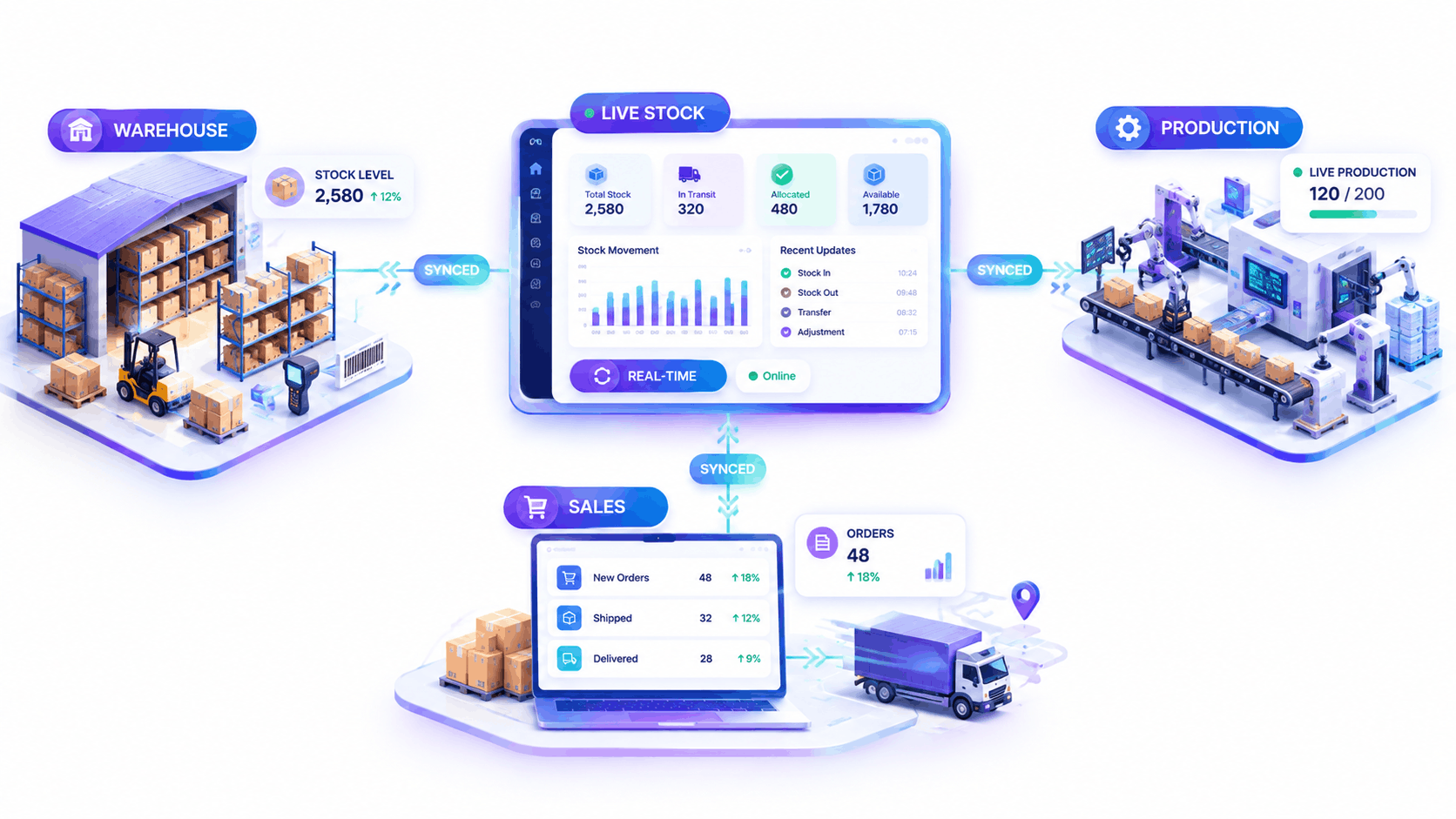
Supply Chain Management Software gives manufacturers a live view of stock across every warehouse, branch, and production line — so nobody is placing a purchase order based on guesswork.
Demand forecasting & planning
By analysing historical sales and seasonal patterns, it helps planning teams predict demand more accurately, avoiding both stockouts and excess inventory.
Supplier & procurement management
Good Supply Chain Management Software keeps every supplier record, purchase order, and delivery timeline in one place, so procurement teams stop chasing information across emails and calls.
Warehouse & logistics coordination
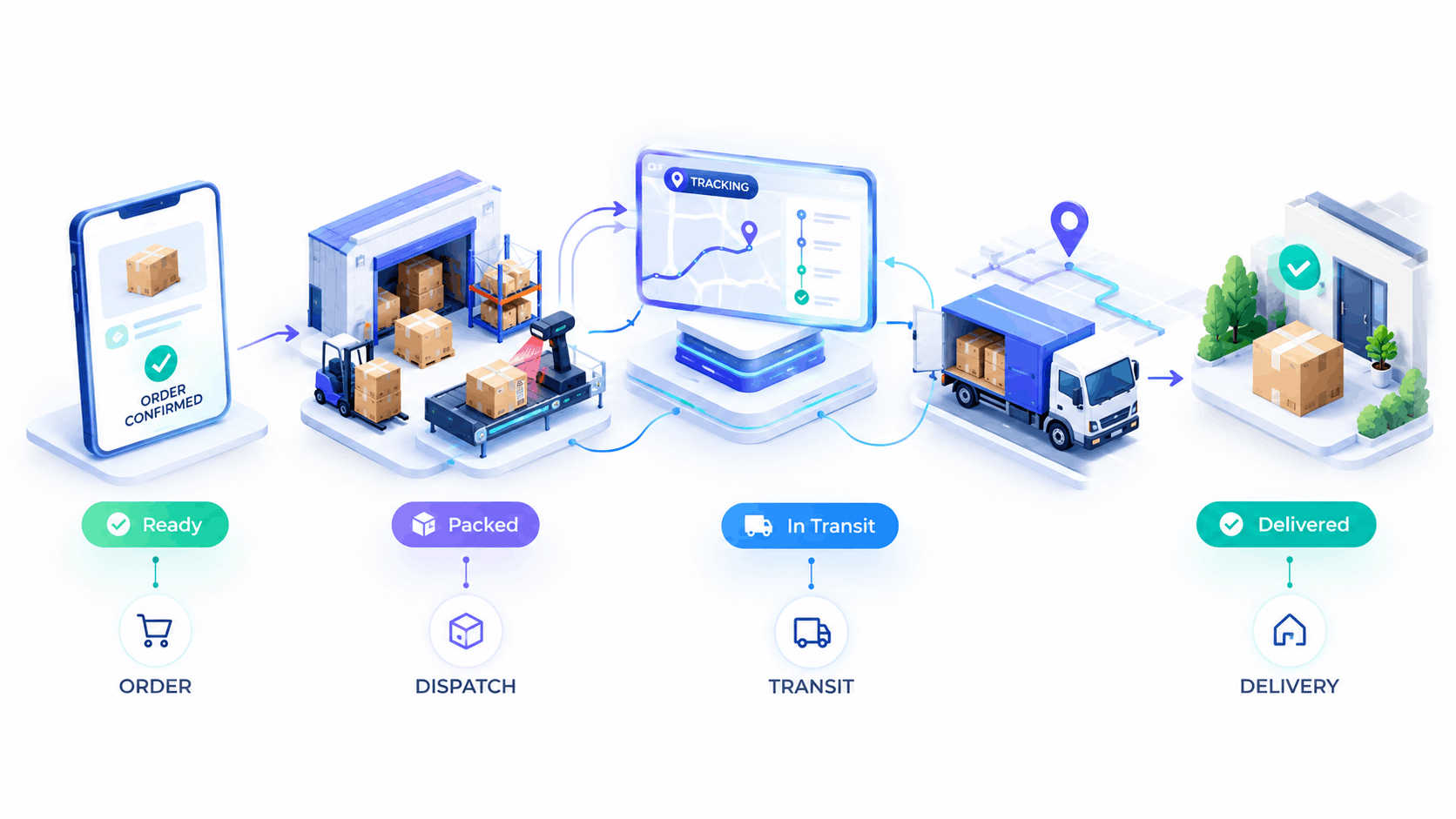
A modern platform coordinates picking, packing, and dispatch schedules, cutting the time between order confirmation and shipment out the gate.
Production scheduling integration
When it's connected to the shop floor, production schedules automatically adjust as raw material availability or order priority changes.
Analytics & reporting dashboards
Dashboards built into the platform translate raw operational data into decisions leadership can act on the same day, not at month-end.
Benefits of Supply Chain Management Software for Indian manufacturers
Manufacturers that invest in Supply Chain Management Software typically see measurable improvements within the first two quarters of going live. Because it connects finance, procurement, and dispatch data, decision-makers stop reacting to problems and start preventing them.
- ✓ Lower inventory carrying costs and less dead stock
- ✓ Fewer stockouts and last-minute rush orders
- ✓ Faster order-to-delivery cycles for customers
- ✓ Stronger negotiating position with suppliers
- ✓ Better compliance and audit-ready records
- ✓ Clear visibility for owners across every plant
What happens without Supply Chain Management Software
Manufacturers running on spreadsheets and manual coordination tend to run into the same set of problems, over and over:
- ✓ Production stalls because nobody noticed a raw material was running low
- ✓ Two teams place separate purchase orders for the same item
- ✓ Owners find out about a shortage only after a customer complains
- ✓ Month-end reports take days to assemble instead of minutes
- ✓ New staff take weeks to learn where information actually lives
- ✓ Growth gets harder because every new branch adds more manual work
None of these problems are about effort — teams are usually working hard already. They're symptoms of information sitting in too many places at once. The right system fixes the root cause by giving everyone, from the warehouse floor to the owner's office, the same version of the truth.
Supply Chain Management Software and the best ERP software for manufacturing in India
When Supply Chain Management Software is built into the best ERP software for manufacturing in India, manufacturers avoid the cost and risk of stitching together multiple disconnected systems. Finance, inventory, production, and dispatch all read from the same data — so a change on the shop floor is reflected in procurement and accounting instantly.
This is also where a trusted digital transformation company in India earns its place: not just installing software, but mapping your existing processes, cleaning up data, and training teams so it's actually used the way it was designed to be.
How Innoverse 360 helps you implement Supply Chain Management Software
As a digital transformation company in India, Innoverse 360 works alongside manufacturers to select, configure, and roll out Supply Chain Management Software without disrupting daily production. That includes mapping current workflows, migrating existing data safely, and training procurement, warehouse, and production teams so adoption sticks after go-live — not just in the first week.
Every rollout is scoped around your plant size, product mix, and growth plans, so you're not paying for modules you'll never use.
A quick checklist for evaluating Supply Chain Management Software
Before choosing a platform, walk through these points with your team:
Map your current pain points — where do delays, errors, or stockouts actually happen today?
Confirm it integrates cleanly with your existing ERP, accounting, and dispatch tools.
Involve floor-level teams — warehouse and procurement staff — in the evaluation, not just management.
Ask for a realistic implementation timeline, including data migration and staff training.
Check that reporting and dashboards match how your leadership actually reviews the business.
Frequently asked questions
Is this only for large factories?
No. Small and mid-sized manufacturers often see the fastest returns, because manual coordination costs them a larger share of their margin than it does a large plant.
How long does implementation usually take?
A focused rollout typically takes a few weeks to a few months, depending on how many warehouses, suppliers, and product lines need to be mapped.
Do we need to replace our existing ERP?
Not always. In many cases, it can be added as a module to your current system rather than a full replacement — your implementation partner will confirm what fits.
Ready to streamline your supply chain?
Talk to the Innoverse 360 team about rolling out the right Supply Chain Management Software for your manufacturing business.