Tally Alternative for Manufacturing
Evaluate a Tally alternative for manufacturing across production planning, BOMs, inventory, costing, purchasing, reporting and connected business operations.
What's Inside
- 01 What Is a Tally Alternative for Manufacturing?
- 02 Why Manufacturers Look Beyond Tally
- 03 Production Planning and Manufacturing Control
- 04 Inventory, BOM and Material Control
- 05 Manufacturing Costing and Profitability
- 06 Purchasing, Sales, Finance and Integration
- 07 Tally vs a Manufacturing-Focused ERP
- 08 ERP Options to Consider
- 09 How to Choose the Right Alternative
- 10 Implementation Checklist
- 11 Conclusion
- 12 Frequently Asked Questions
TallyPrime is widely used by Indian businesses for accounting, GST compliance, inventory and manufacturing workflows. Its current manufacturing features include bills of material, manufacturing journals, stock tracking, job work, reorder levels and costing. That makes it a practical choice for many smaller manufacturers.
As a factory grows, however, the question often changes from “Can our accounting software handle manufacturing?” to “Can one business system coordinate production, planning, inventory, purchasing, costing and reporting?” That is where a Tally alternative for manufacturing becomes worth evaluating.
The right alternative is not simply the platform with the longest feature list. It should fit the manufacturing model, connect the processes that matter, provide reliable operational data and scale with the organization.
What Is a Tally Alternative for Manufacturing?
A Tally alternative for manufacturing is an ERP or business management platform selected to provide broader or more manufacturing-focused capabilities than the current Tally setup. The reason may be deeper production planning, stronger supply-chain integration, multi-site control, advanced analytics, workflow automation or a more connected data architecture. You can also review the official TallyPrime inventory features and TallyPrime manufacturing documentation when benchmarking your current setup.
This does not mean TallyPrime is unsuitable for every manufacturer. Tally's own documentation shows support for BOMs, manufacturing journals, inventory, job work and item costing. The decision should therefore be based on actual process gaps rather than assumptions.
Why Manufacturers Look Beyond Tally
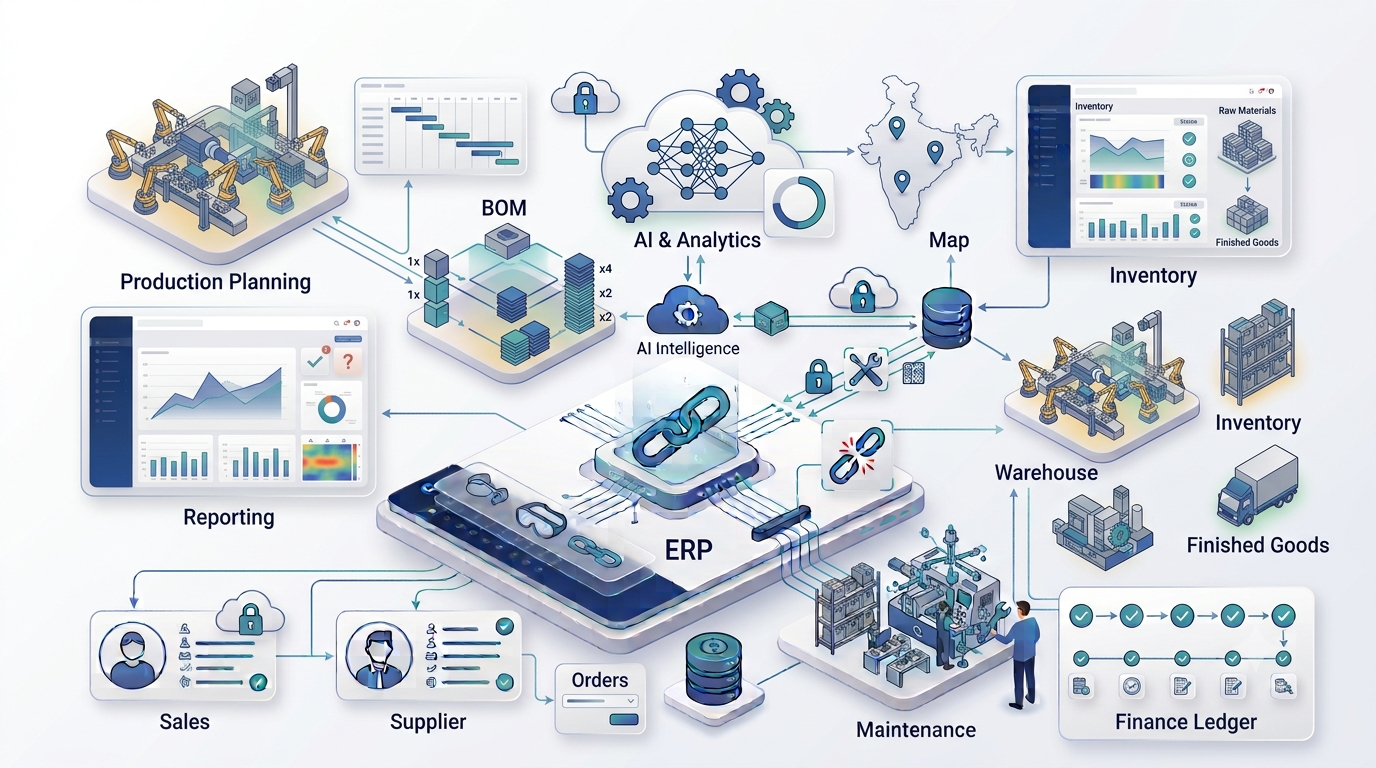
Manufacturers usually evaluate a Tally alternative for manufacturing because operational complexity has increased. A business may have several production lines, multiple warehouses, subcontractors, customer-specific products, engineering changes, tighter traceability requirements or management teams that need consolidated information.
- Production planning is maintained separately from accounting.
- Material availability requires spreadsheet checks.
- Work-in-progress is difficult to see by order or operation.
- Costing requires manual consolidation.
- Purchasing decisions are disconnected from production requirements.
- Management reports require repeated exports and spreadsheet preparation.
- Multiple sites or business units need a unified data model.
These are process-architecture signals, not proof that one product is universally better. Start by mapping the flow from sales demand to planning, procurement, production, inventory, dispatch and finance.
Production Planning and Manufacturing Control
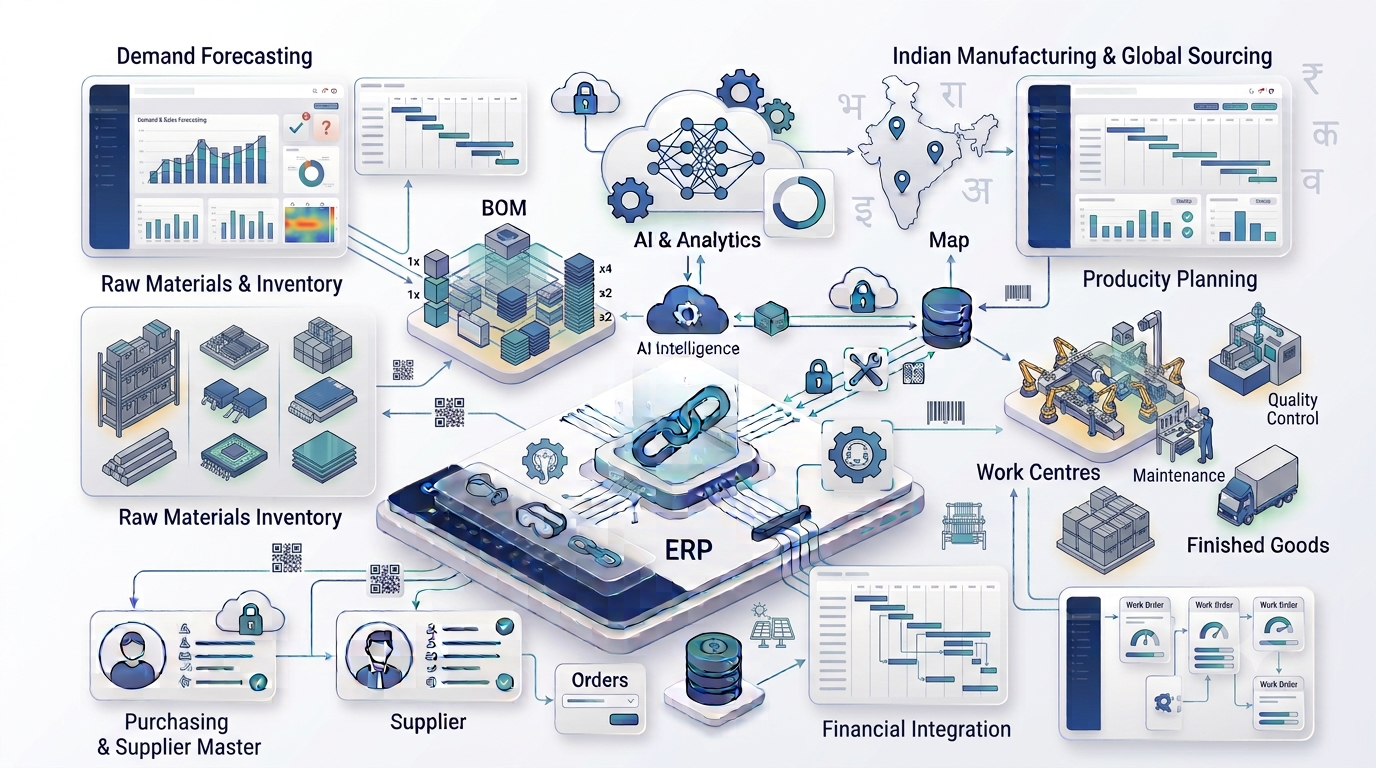
Manufacturing is more than recording material consumption and finished goods. Planners need visibility into demand, material availability, capacity, production orders, routings, work centres and delivery commitments.
This is one area where a manufacturing-focused Tally alternative for manufacturing can provide a different operating model. Microsoft Dynamics 365 Business Central documents production BOMs, routings, work and machine centres, production orders, material consumption and production analysis. Its manufacturing functionality connects with supply planning, inventory, warehousing, costing and subcontracting. See Microsoft's manufacturing overview.
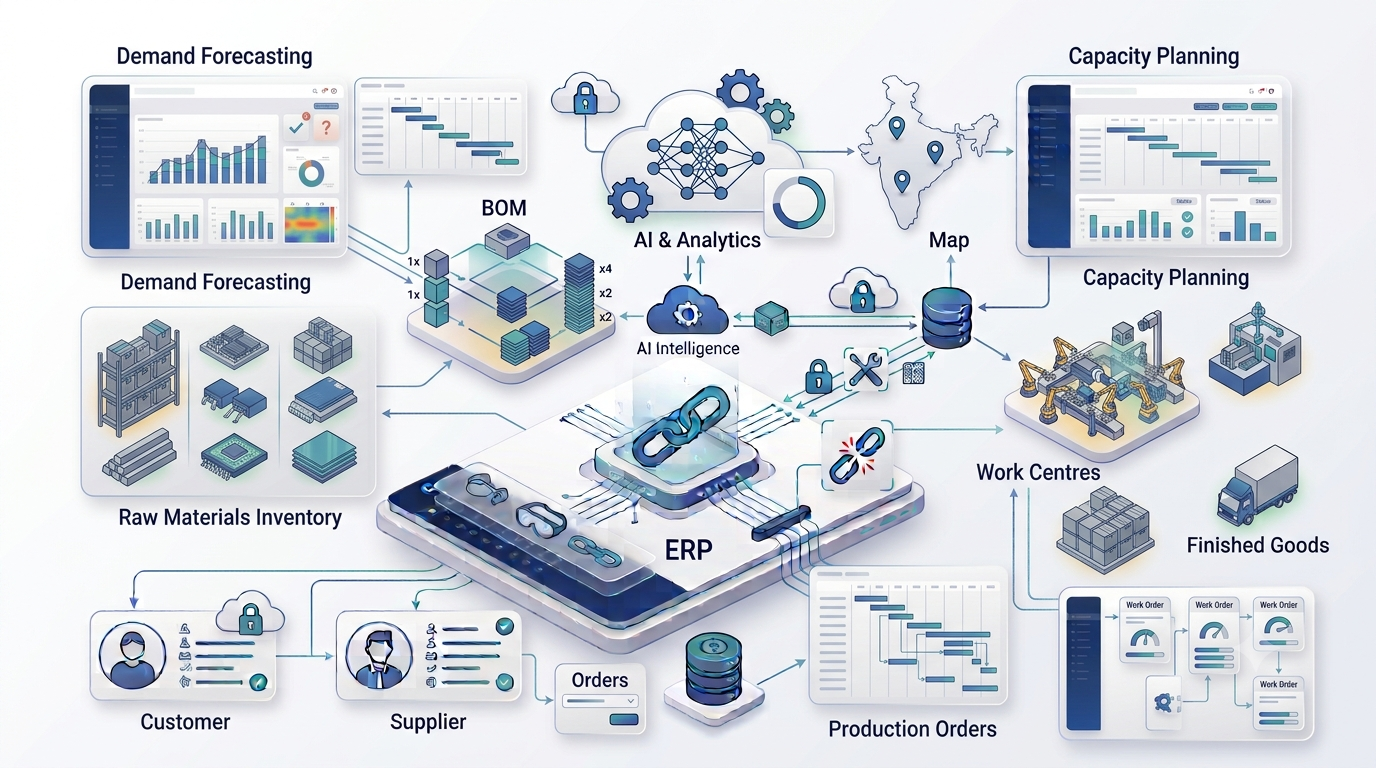
The important question is not whether an ERP has a production screen. Ask whether planners can trace demand, material requirements, capacity, production execution and inventory updates without depending on disconnected files.
Inventory, BOM and Material Control
Inventory is tightly connected to manufacturing performance. Raw-material shortages can delay production, excess stock can tie up working capital and inaccurate consumption can distort product costs. A scalable ERP should connect item masters, BOMs, stock movements, warehouse locations, purchasing and production transactions.
TallyPrime supports manufacturing inventory processes including BOMs, stock tracking across locations, manufacturing journals, job work and item costing. A useful comparison therefore looks at depth and integration rather than assuming an alternative automatically offers more value.
- Multi-level or complex BOM requirements.
- Raw material, WIP and finished-goods visibility.
- Warehouse and location control.
- Batch, serial or traceability requirements where applicable.
- Material planning linked to production demand.
- Replenishment and purchasing recommendations.
Manufacturing Costing and Profitability
Manufacturing profitability depends on more than selling price minus material cost. Depending on the business, costs can include labour, machine time, subcontracting, freight, overhead, wastage and other production expenses.
When cost information is spread across accounting entries, spreadsheets and production records, management may spend time reconciling figures. A Tally alternative for manufacturing should therefore be assessed on how naturally it connects production transactions with inventory valuation, purchasing, resource costs and financial reporting.
TallyPrime already provides job costing and manufacturing cost features. The better question is whether the system supports the level of product, order, project, operation or plant-level profitability analysis your management team requires.
Purchasing, Sales, Finance and Integration
Manufacturing does not operate in isolation. A customer order can create production demand; production demand can create material requirements; material requirements can create purchase orders; receipts affect inventory; production changes stock; dispatch affects sales; and transactions ultimately affect finance. Teams evaluating Business Central can also review Microsoft Business Central pricing and current Business Central AI capabilities.
A modern ERP alternative should make these relationships visible. Integration also matters when a manufacturer needs e-invoicing, e-Way Bill workflows, banking, CRM, warehouse tools, supplier portals or specialist applications.
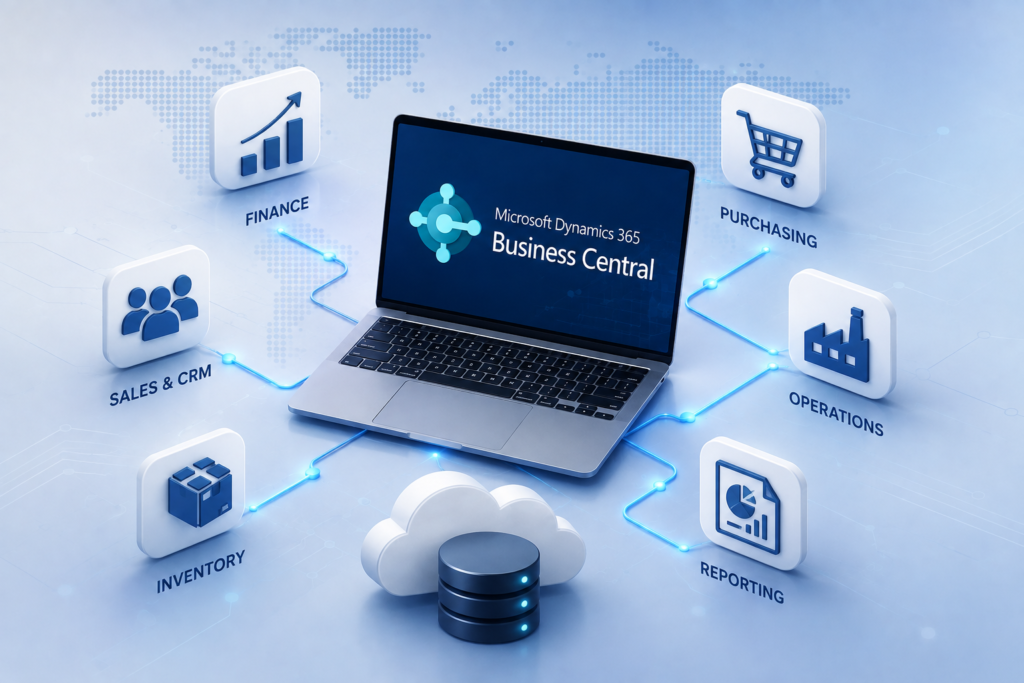
Microsoft positions Business Central as an ERP platform covering financial management, sales, service, operations and supply-chain processes. Manufacturers considering it can review the official Business Central product page.
If your teams still depend heavily on spreadsheets, see our related guide on ERP vs Excel for Manufacturing.
Tally vs a Manufacturing-Focused ERP
| Area | TallyPrime | Manufacturing-focused ERP |
|---|---|---|
| Accounting & GST | Strong core capability | Integrated with wider operational workflows |
| Inventory | Stock, locations, batches and valuation features | Often connected directly to planning, production and warehouse processes |
| BOM & production | BOMs and manufacturing journals | May add planning, routings, capacity and production coordination |
| Job work | Supported with dedicated workflows | May provide broader subcontracting and supply-chain integration |
| Planning | Depends on process and configuration | Often a central ERP planning workflow |
| Analytics | Business and inventory reporting | Can connect operational, financial and production analytics |
| Scalability | Suitable for many SMB scenarios | Can be selected for more complex or multi-site operating models |
This is a comparison framework, not a product scorecard. TallyPrime has substantial manufacturing capabilities, while ERP platforms differ in depth, configuration, licensing and implementation effort.
ERP Options to Consider
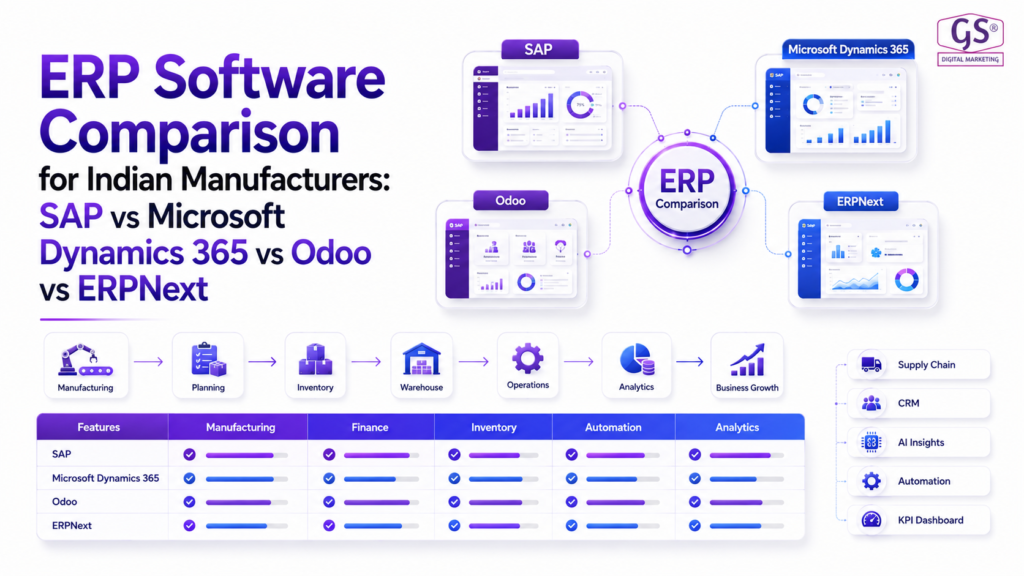
There is no single best Tally alternative for manufacturing. The shortlist should depend on company size, manufacturing model, locations, regulatory requirements, budget, existing technology and process complexity. Useful product references include SAP Business One, ERPNext, Odoo Manufacturing.
Microsoft Dynamics 365 Business Central
Worth evaluating for growing manufacturers that need finance, inventory, purchasing and manufacturing processes in one ERP environment.
SAP Business One
Worth considering when an SMB or mid-market company wants an established ERP platform with broad business-process coverage.
ERPNext
An open-source ERP option to evaluate when flexibility, customization and manufacturing workflows are important.
Odoo
A modular ERP platform to consider when manufacturing needs to connect with accounting, inventory, sales, CRM and other applications.
Innoverse 360 works across Microsoft Dynamics 365, SAP, ERPNext, Odoo and custom ERP solutions, allowing manufacturers to compare platform fit rather than forcing every business into one technology choice.
How to Choose the Right Tally Alternative for Manufacturing
Start with the manufacturing process, not the vendor brochure. Map the workflow from order entry through planning, procurement, production, quality, warehouse, dispatch and accounting. Then identify where information is duplicated, delayed or manually reconciled.
Make-to-stock, make-to-order, job work, process manufacturing, discrete manufacturing or a mixed model can change ERP requirements.
List BOM depth, routings, work centres, capacity constraints, subcontracting and engineering changes.
Document warehouses, bins, batches, serials, traceability, replenishment and valuation requirements.
Include GST, e-invoicing, e-Way Bill, banking, CRM, ecommerce, machines, portals and other systems.
Identify dashboards and reports for production, inventory, sales, purchasing and profitability.
Tally to ERP Migration and Implementation Checklist
Choosing a Tally alternative for manufacturing is only the first step. Migration needs a controlled plan so accounting data, opening balances, item masters, customers, suppliers, inventory and manufacturing structures are transferred accurately.
- Document current Tally processes and workarounds.
- Clean customer, supplier, item and chart-of-accounts master data.
- Review BOMs, units of measure, warehouses and opening inventory.
- Map GST, invoicing, purchasing, sales and financial workflows.
- Define production planning, job work and costing requirements.
- Identify integrations and API requirements.
- Test migrated data and end-to-end transactions.
- Train users by role and process.
- Run a controlled go-live with reconciliation and support procedures.
Implementation cost should be separated into licensing, implementation services, migration, integrations, customization, training and ongoing support. See our guide to ERP implementation cost in India.
Conclusion
A Tally alternative for manufacturing becomes relevant when operational requirements have outgrown the way accounting, inventory and manufacturing activities are connected. The objective should not be replacement for its own sake. It should be a more reliable operating model for production, materials, costing, purchasing, sales, finance and management decisions.
TallyPrime remains a capable option for many manufacturers, including businesses using BOMs, manufacturing journals, inventory and job-work workflows. But when planning, production control, multi-site operations, integrated supply chain or advanced reporting become central requirements, broader ERP platforms are worth comparing.
For the next step, explore the Innoverse 360 ERP blog, review ERP case studies, or talk with an ERP transformation team.